An insightful webinar examining the realities of navigating financial distress in an increasingly fragmented global economy was hosted recently at the University of KwaZulu-Natal (UKZN).
The event was facilitated by the Business Rescue Unit in the School of Commerce within the College of Law and Management Studies at UKZN.
Presented under the theme: ‘Business Rescue Under Pressure: Navigating Financial Distress in a Fragmented Global Economy’, the webinar brought together academics, students, business rescue practitioners and industry professionals for robust discussions on the evolving business rescue landscape in South Africa.
Welcoming participants, Business Rescue Unit co-chair Dr Kajal Ramnanun described the engagement as an important platform for dialogue on the growing pressures confronting businesses amid economic instability, global fragmentation and financial uncertainty.
Dean and Head of the School of Commerce, Professor Stephen Mutula, highlighted the significance of the webinar in addressing critical issues affecting the South African business rescue environment. Mutula noted that global conflict in Eastern Europe and the Middle East continues to disrupt international trade, supply chains and fuel costs, placing immense pressure on businesses and economies worldwide.
Mutula emphasised the vulnerability of small and medium enterprises (SMEs), which account for the majority of businesses globally and play a vital role in job creation and economic development. “There is a need for business rescue interventions to support industrial growth, preserve employment and strengthen business resilience through collaborative partnerships between government, industry and financial institutions,” he said.
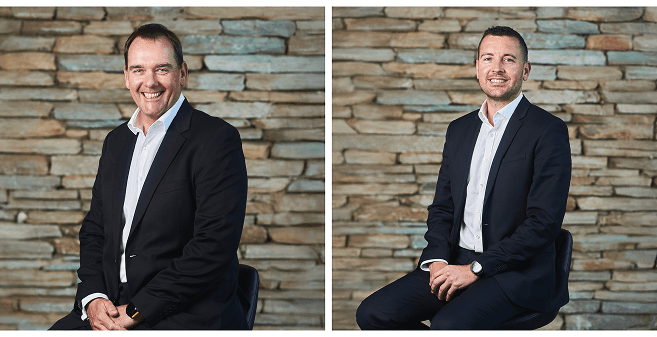
The keynote presentations were delivered by leading business rescue practitioners Mr Peter van den Steen and Mr Gerhard Albertyn of Metis Strategic Advisors. The pair shared practical insights from their extensive experience in corporate restructuring, turnaround strategy and business rescue.
A recurring theme throughout the webinar was the importance of early intervention in preventing business collapse. Van den Steen explained that businesses often delay seeking assistance due to optimism bias, fear of reputational damage or reluctance to engage external advisors.
“Early intervention preserves options, trust and value,” he said, adding that businesses which seek help sooner are better positioned to implement structured recovery plans and avoid destructive financial crises.
The speakers unpacked the ‘distress spiral’ commonly experienced by struggling companies, where declining liquidity, tightening credit conditions, loss of stakeholder confidence and operational instability progressively reduce the organisation’s ability to recover.
Using high-profile case studies including Tongaat Hulett, Hernic Ferrochrome and Stefanutti Stocks, the presenters illustrated the contrasting outcomes of late versus early intervention strategies.
The Tongaat Hulett case was highlighted as an example of a late intervention, where restructuring efforts became increasingly difficult due to mounting creditor pressure, operational instability and declining stakeholder confidence.
In contrast, the Hernic Ferrochrome business rescue demonstrated how early intervention, collaborative stakeholder engagement and adequate post-commencement funding enabled the preservation of jobs, continuity of operations and the successful sale of the business as a going concern.
The presenters also reflected on the successful turnaround of Stefanutti Stocks through an informal restructuring process that avoided formal business rescue proceedings altogether. Through proactive engagement with lenders, operational restructuring and transparent communication, the company was able to stabilise operations and restore investor confidence.
Throughout the webinar, transparency, trust and decisive leadership emerged as central pillars of successful restructuring efforts. Albertyn noted that distressed businesses require objective and often difficult decision-making informed by experience and timely action.
The webinar concluded with an interactive discussion session, where participants engaged the speakers on topics ranging from governance and lender relations to the future of business rescue practice in South Africa.
Professor Paul Francois Muzindutsi, the Chairperson of the BRU Unit, provided the closing remarks and the engagement reaffirmed UKZN’s commitment to advancing scholarship and professional dialogue on economic resilience, corporate sustainability and innovative approaches to business continuity in uncertain global conditions.
The webinar was part of the build-up to the 4th International Conference of the UKZN Business Rescue Unit on Business Resilience, Continuity and Regeneration, scheduled to take place from 17-19 June 2026 at the Southern Sun Elangeni and Maharani hotels in Durban.
Words: Hazel Langa
Photograph: Supplied