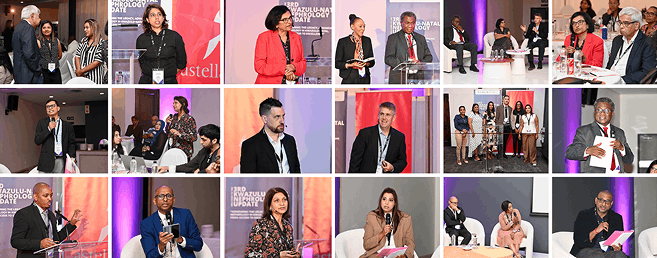
‘Honouring the Legacy, Advancing Renal Care in KZN: From Basic Access to Excellence’, was the theme of this year’s third KwaZulu-Natal Nephrology Update.
The Update also launched the inaugural YK Seedat Memorial Lecture in honour of the late Emeritus Professor, presented by his peer, Professor Sarala Naicker, titled: ‘Burden and Impact of Chronic Kidney Disease (CKD)’.
Nephrology is a medical subspeciality that deals with the diagnosis and management of kidney diseases.
Delivering a gracious and compelling tribute to her colleague, underscoring Seedat’s achievements and influence, Naicker said numerous studies had been conducted. These examined the impact of early intervention in order to identify those likely to progress rapidly and refer them for appropriate care.
This results in less progression to kidney failure, improved functional status, and decreased mobility and hospitalisation, as well as fewer urgent complications.
Naicker said South Africa and the entire continent would be wise to institute screening, early diagnosis and prevention as part of universal health coverage. “We should ensure sustainability and I think that is where we are failing – we may have clinics but they are not sustainable because they lack trained staff. We also don’t have diagnostic materials and we have stock-outs with key medications not being available. So how can you tell a patient to be compliant if you are going to turn around and tell them that ‘we are out of stock this month’. Education is critical, point-of-care testing and screening are crucial and we need to ensure proper referral pathways,” he said.
The Update, a premier academic and multidisciplinary clinical event dedicated to advancing kidney care across KZN and South Africa, took place in April at Mount Edgecombe Country Club, hosted by the University of KwaZulu-Natal (UKZN), under the leadership of Professor Alain Assounga, in collaboration with the KwaZulu-Natal Department of Health (KZN DoH), and Astellas.
The gathering brought together leading nephrologists from KZN and across South Africa, alongside hospital leadership and key stakeholders, including representation from the National Department of Health, particularly in the areas of dialysis, transplantation services and promoting kidney donation.
The scientific programme featured an array of insightful multidisciplinary presentations during the sessions chaired by industry giants, spanning kidney disease and complications, kidney replacement therapy, glomerular disease, and matters related to kidney transplants.
The event convenor, Acting Head of the Nephrology Clinical Unit at the Victoria Mxenge and St Aidan’s Hospitals in Durban, Dr Leann Guruvadu, said the Update was designed to engage both the public and private healthcare sectors, fostering collaboration, shared learning, and aligning strategies to improve access to high-quality renal care for all South Africans.
“The meeting represented a critical step in uniting the public and private sectors to address the growing burden of kidney disease in South Africa. By working together, we can build a more equitable, innovative, and sustainable renal care system for our patients,” Guruvadu said.
She added that the introduction of the memorial lecture marked a significant milestone in the province’s academic and clinical nephrology landscape. “Professor YK Seedat is internationally recognised for his contributions to nephrology, hypertension research and medical education.”
Guruvadu said: “As part of honouring Professor Seedat’s legacy, the meeting also marked the revival of the KZN Kidney Association. A key initiative under this revival will be the provision of Continuous Ambulatory Peritoneal Dialysis (CAPD) for a defined period to selected patients who would otherwise face preventable mortality due to lack of access to renal replacement therapy.”
The programme highlighted strategies to increase donor utilisation, including paired donor exchange programmes and ABO-incompatible transplantation (where the recipient and donor blood types are mismatched). These innovations were said to be critical to expanding access to transplantation, which remains the only definitive cure for kidney failure.
Said Assounga: “The 3rd KZN Nephrology Update was an opportunity to assess progress made in the development of nephrology in KZN, and to learn the latest innovation in that field. In the next year, all the role-players are invited to address the challenges in the delivery of nephrology care in the province”.
- UKZN’s Nephrology discipline provides nephrology teaching to undergraduate and postgraduate students, clinical care for patients and offers teaching and research in immunology, including transplantation immunology, and molecular biology.
Words: Lunga Memela
Photographs: Albert Hirasen