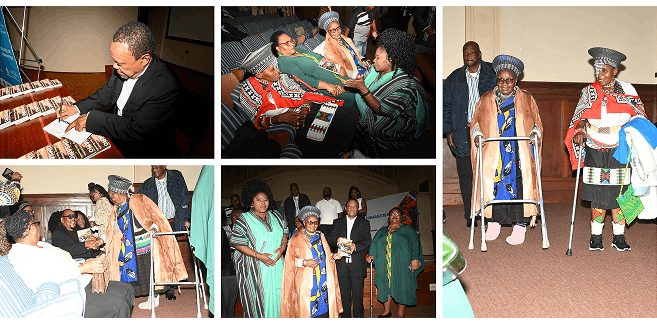
As part of the University of KwaZulu-Natal’s (UKZN) commitment to advancing African scholarship and strengthening programmes in African Languages and African Studies, the Chart-Umsamo Institute in the School of Arts hosted the launch of a book on African indigenous knowledge, traditional healing and spirituality.
Titled: Imfihlo yempophoma – Kuthangi, izolo nanamuhla, the book is a collection of 60 poems by legendary poet BB Ndelu that reflect on inherited customs, beliefs, and ways of life passed down through generations, capturing the essence of African heritage.
The event, facilitated by Professor Victor Velaphi Otty Mkhize from the Discipline of Ancestrology, Theology and Religion in the School of Arts, featured Abelaphi bendabuko (traditional healers) as well as contributing authors of the anthology.
Ndelu and Mkhize became close when Mkhize was researching aspects of IsiZulu customs and practices. Ndeulu was a prominent South African author, playwright, and poet celebrated for his contributions to isiZulu literature.
Prior to the text from the original handwritten manuscript, Mkhize recognised the depth of the language used in the poems and then enlisted the help of former UKZN academic, Professor Gugu Mazibuko who is now an Associate Professor in the Department of African Languages at the University of Johannesburg as well as Ms Hlengiwe Ngcongo, an independent IsiZulu language expert working for the KwaZulu-Natal Department of Arts and Culture whose help was enlisted by Mazibuko, ensuring its accessibility while preserving its depth and meaning.
Welcoming guests on behalf of the Deputy Vice-Chancellor, Professor Nhlanhla Mkhize; College of Humanities, Dean of Research, Professor Vivian Ojong highlighted the challenges often encountered in translation, noting that meaning can sometimes be lost in the process. Ojong encouraged Black historians and scholars of African history to continue using isiZulu as a primary medium of communication, emphasising the importance of authenticity in storytelling.
Ojong further noted that the University continues to invest in the development of isiZulu and other indigenous languages, including South African Sign Language, positioning them as languages of administration, teaching and learning, research, trade, and technology.
Ngcongo confirmed that the poems were written in very deep poetic isiZulu language with earthy themes. The editors found the author Ndelu an excellent researcher and, according to Ngcongo, his literary works select words creatively; hence, preserving isiZulu language. “The author was a person who looked at things deeply, scrutinised them, and voiced his views,” said Ngcongo.
Mazibuko commended the writer’s poetic craftsmanship, noting that “the tone used in the poems compels the reader to keep turning the pages.”
“I am optimistic about Africans reclaiming their identity,” said Onjong. “I encourage both the public and students to continue telling African stories with depth and meaning.”
The national speaker of parliament, Ms Thoko Didiza, a member of the Ndelu extended family, delivered a message of support and appreciation for the efforts of UKZN in promoting African scholarship.
The book was handed over to Ndelu’s 93-year-old widow, Mrs Rosette Nomnikelo Ndelu, and her children and grandchildren.
Words: Sinoyolo Mahlasela
Photographs: Albert Hirasen