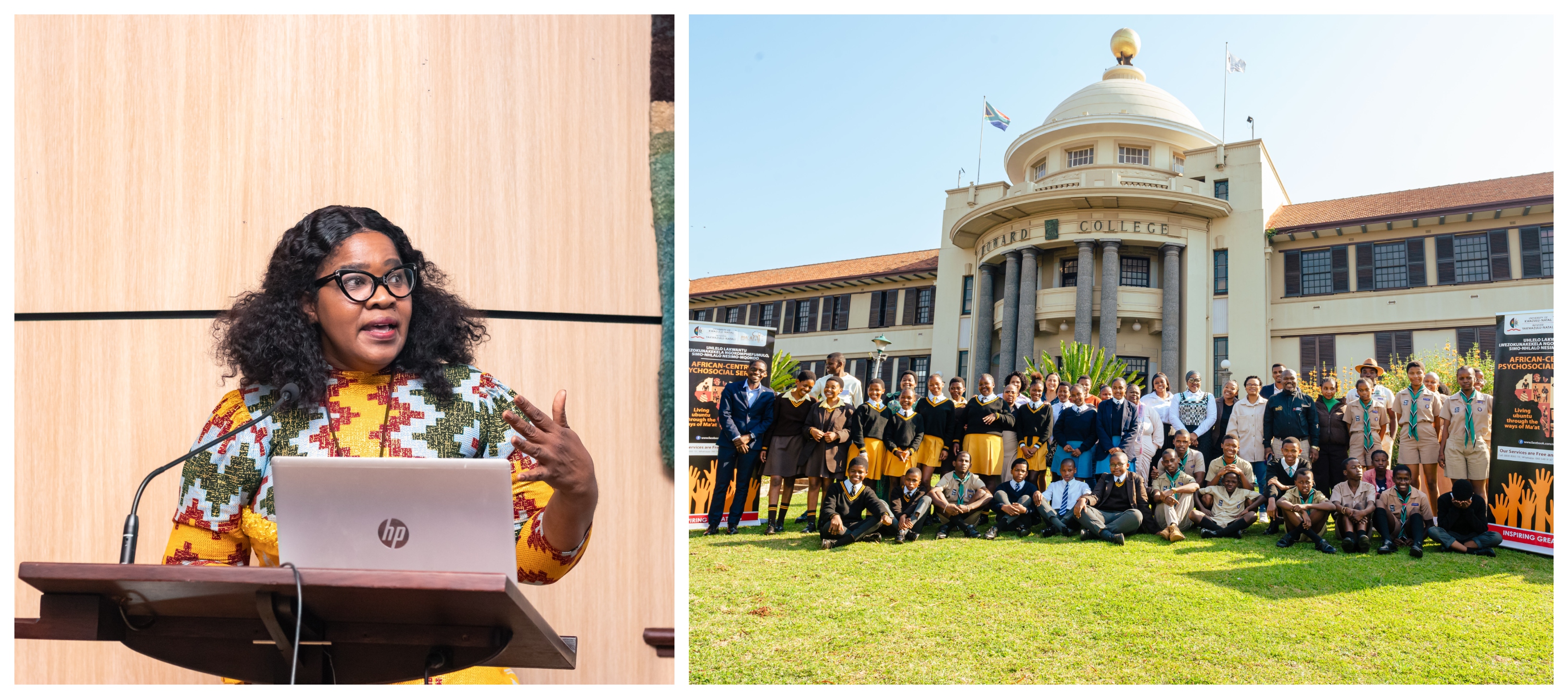
Professor Sibonsile Zibane, affectionately known as MaZibane, Associate Professor of Social Work in the School of Social Sciences at UKZN’s College of Humanities, believes learning is most meaningful when it speaks directly to one’s lived realities.
Her commitment to social transformation is rooted in her upbringing in KwaMashu, Durban, where she witnessed resilience of communities and the deep inequalities they faced. These early experiences inspired her to pursue social work and shaped a lifelong commitment to healing, justice and community development.
Her journey led her to question whether Western frameworks alone could adequately address the complexities of African communities. “I realised that many challenges faced by African communities could not be fully understood or addressed through Western frameworks alone,” she says.
This conviction became central to her African-centred scholarship, teaching and community engagement, including the Ma’at Institute, which she co-founded to advance Afrocentric research, psychosocial services and community healing. Guided by ‘Living Ubuntu through the Ways of Ma’at’, the Institute also provides specialised training and practical learning opportunities for Social Work graduates and students. This connects their academic programme with real community needs and strengthens the University’s responsiveness to the requirements of degree programmes.
For Zibane, the classroom is also a space for transformation. Drawing on Indigenous Knowledge Systems, her teaching and research incorporate singing, chanting, storytelling and other cultural practices to facilitate healing, strengthen collective identity and affirm African identities. “For me, social work is not only about solving problems; it is about restoring dignity, affirming identity and creating pathways for communities to thrive,” she declares.
Her commitment to this approach was particularly evident during the COVID-19 pandemic and the KwaZulu-Natal floods, when communities experienced profound grief, loss and disruption. African practices including ukugeza (cleansing), ukuzila (mourning practices), prayer, storytelling, and spirituality provided meaningful pathways towards healing.
“Witnessing people regain hope, reconnect with their identities and begin healing affirmed that African-centred scholarship is not simply an academic pursuit but a practical and life-affirming framework that can transform lives,” she says.
One of her greatest joys is seeing the growth of the student graduates she mentors watching them obtain PhDs, enter academia, or soar in the business world. Her purpose in mentorship is to developing people who are confident in their abilities and well equipped to serve their communities.
Outside academia, she treasures her family, faith and African cultural identity, which together shape the values and give a sense of completeness to her home life.
Her own legacy is captured in her personal motto: “Aligning and unleashing greatness within and around me”. She hopes to leave behind a generation of scholars and practitioners confident in African knowledge systems, African identity and African agency, that are committed to ensuring that African contributions remain an important part of global knowledge.
Author: Lorna Charles-Wright