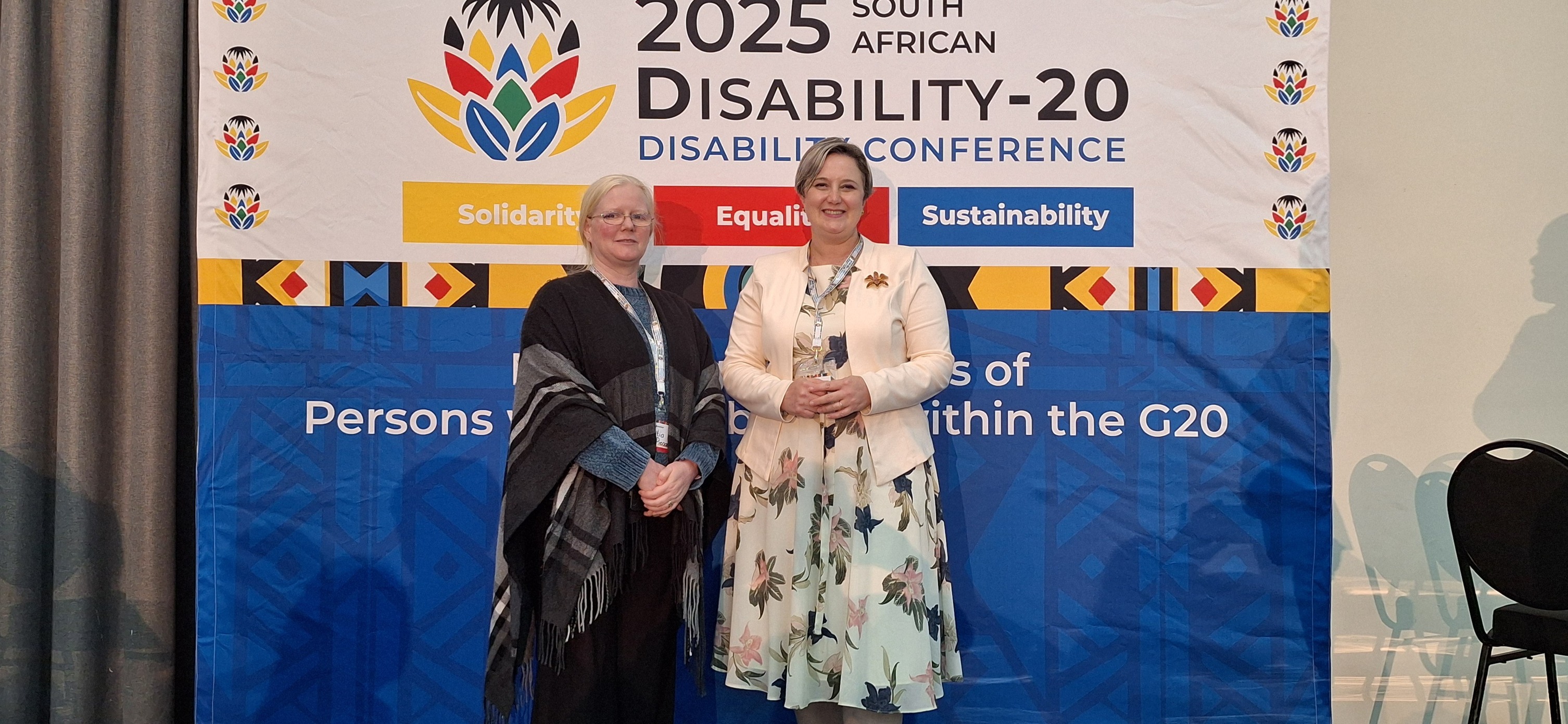
For Associate Professor Willene Holness, the pursuit of justice was not an academic choice—it was a calling shaped long before she stepped into a lecture hall.
Her childhood experiences, combined with early guidance from inspiring mentors, sparked a vital realisation: the law is never neutral; it either reinforces systemic inequality or serves as a powerful instrument for social transformation. Today, as Associate Professor in University of KwaZulu-Natal’s (UKZN) School of Law, that belief continues to drive her work.
As a child in the 1980s, Holness accompanied her mother, a lecturer at a teacher’s college, to work during school holidays. Outside the college in the former KwaNdebele “homeland”, Mpumalanga, students protested for educational rights, and her mother explained the injustices they faced. This helped her understand the privilege she carried and the realities of an unjust system. “That experience shaped my commitment to justice,” she recalls.
Years later, during university vacations, her work with Barbara Kenyon, of the Greater Nelspruit Rape Intervention Center, strengthened her interest in women’s and children’s rights. Her passion for disability rights was sparked by watching her alma mater, Rhodes University, make its environment accessible to a friend who had acquired a physical disability following a car accident. It opened her eyes to universal design, accessibility, and reasonable accommodation, and the need to move society away from viewing people with disabilities through a lens of charity or ‘fixing’.
At UKZN, these principles continue to inform her teaching, research, and advocacy. Through her teaching in Gender and the Law discipline, Holness challenges legal constructs that can disproportionately affect women, while her incorporation of disability rights into undergraduate and postgraduate modules seeks to equip future legal practitioners with an understanding of substantive equality.
Her research has also demonstrated that academic work can have a tangible impact. This year, she saw a provision on reasonable accommodation included in the Children’s Court Rules, a recommendation she submitted eight years ago. “It was a moment of validation,” she says, “that our research is capable of making a meaningful impact, even if it is much later than we hoped.”
Her advocacy is rooted in collaboration, particularly with communities whose rights are at stake. In 2025, she participated in the Disability20 initiative, which brought together people with disabilities from around the world to develop evidence-based recommendations for the G20 and C20 on issues including poverty, education, and access to justice.
Women’s Day is both a celebration and a reminder of unfinished work for Holness. She believes women and girls with disabilities must be recognised not merely as recipients of protection, but as people with agency whose equal participation in society must be enabled.
Her message to young women entering law is clear: embrace feminist praxis and help transform the profession.
At UKZN and beyond, her work continues to demonstrate how scholarship, when rooted in justice and collaboration, can help change both law and lives.
Author: Lorna Charles-Wright