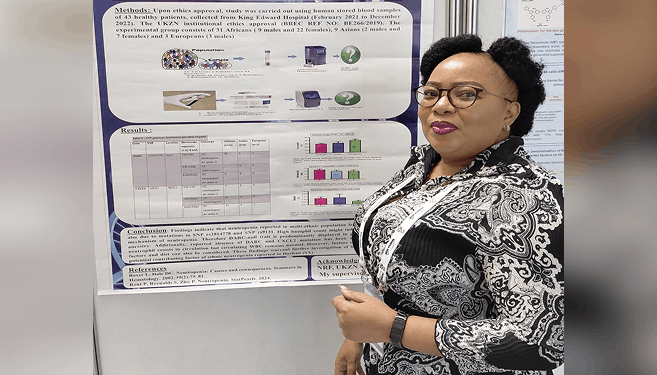
University of KwaZulu-Natal (UKZN) Postdoctoral Fellow in the Discipline of Human Physiology, Dr Nomusa Christina Mzimela, recently presented her latest research findings at the 58th Annual Congress of the Society for Endocrinology, Metabolism and Diabetes of South Africa (SEMDSA), further cementing her growing reputation as an emerging researcher in the field of diabetes, immunity and human physiology.
Presenting in the Basic Science Poster category, Mzimela described the experience as both exciting and rewarding. “It was exciting because I was presenting recent findings that are linked to my previous research on the Durban population,” she said.
This marks the fourth time that Mzimela has presented her research at a national conference. Previous presentations include the 57th and 56th SEMDSA Congresses held in Durban and Johannesburg respectively, as well as the inaugural Conference of Biomedical and Natural Science and Therapeutics (CoBNeST) hosted in Stellenbosch.
Originally from KwaDlangezwa near Empangeni, Mzimela attended KwaDlangezwa High School before pursuing a career in medical science. She holds a Bachelor of Science degree in Biochemistry and Physiology from the University of South Africa, a Bachelor of Medical Sciences Honours degree, a master’s degree in Medical Sciences (Human Physiology), and a Doctor of Philosophy in Physiology from UKZN.
Her passion for research stems from a lifelong desire to improve human health.
“From a young age, I felt deeply concerned when I saw people who were ill and wished there was something I could do to help. Whether through medicine or research, I always wanted to contribute to improving human health,” she explained.
Her current research focuses on prediabetes and immunity, areas she believes hold significant potential in helping prevent the progression of prediabetes to Type 2 diabetes, a growing global health burden.
One of her latest studies investigated genetic factors associated with ethnic neutropenia – a condition characterised by lower-than-normal levels of neutrophils, a type of white blood cell important for fighting infections. Building on earlier findings that revealed widespread neutropenia among Durban residents irrespective of diabetic status, the research explored genetic variations associated with the condition in a multi-ethnic population from Durban.
The findings revealed that a significant proportion of participants carried genetic variants previously associated with ethnic neutropenia. Despite lower neutrophil counts, participants generally maintained normal white blood cell levels, suggesting that other components of the immune system may compensate for these differences.
According to Mzimela, the findings highlight the importance of considering population-specific immune and genetic profiles when diagnosing diseases and administering treatments.
“Our research suggests that Durban’s population may possess unique immune and immune-genetic characteristics. This raises important questions about how diseases are interpreted clinically and how treatments are prescribed, particularly when immune responses may differ between populations,” she said.
Looking ahead, Mzimela hopes to continue growing as both a medical scientist and academic, while expanding her publication record and conference participation. She also aspires to contribute to public health through diabetes awareness initiatives, roundtable discussions and motivational speaking engagements aimed at inspiring younger generations.
She credits much of her academic development to her supervisor, mentor and Distinguished Teacher Award recipient, Professor Andile Khathi, whose guidance continues to motivate her.
“My goal is to follow in his footsteps and continue contributing meaningfully to medical science,” she said.
Outside of her research activities, Mzimela is a member of the Golden Key International Honour Society and the Physiological Society of South Africa (PSSA). She also serves as a committee member of the Diabetes and Endocrinology Research Society of South Africa (DERSSA).
Her personal motto reflects the values that continue to guide her academic journey: “Always remain humble, respect people and let life take care of the rest.”
Words: Lunga Memela
Photograph: Supplied