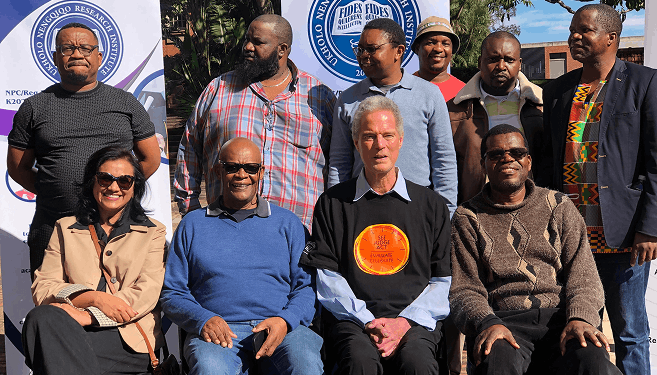
A symposium examining Professor Gerald West’s hermeneutics, from Black Theology of Liberation to Contextual Bible Study, recently took place at the University of KwaZulu-Natal’s (UKZN) Pietermaritzburg campus.
Hosted by the UKZN Department of Theology in collaboration with Unisa, the Ujamaa Centre and Ukholo Nenqiqo, the academic initiative brought together scholars and intellectuals to engage in discussions around African philosophy, heritage, liberation theology, and inclusive epistemologies.
Scholars reflected on how African traditions and perspectives can shape contemporary Higher Education, theology, and cultural discourse, emphasising the importance of collective memory and heritage in informing contemporary scholarship and strengthening community engagement.
The symposium also honoured the contribution of Professor Gerald West, who serves as Professor Emeritus in the former School of Religion, Philosophy and Classics, now part of the School of Arts at UKZN. West is widely recognised for his work in liberation hermeneutics as Itumeleng Mosala’s chief interlocutor; he is also celebrated for pioneering the Contextual Bible Study method, as well as creating spaces for marginalised voices within theological scholarship.
Professor Elelwani Farisani, an Old Testament Bible scholar from Unisa, reflected on West’s contribution to transforming institutional spaces within academia. “West brought into the School executive voices of marginalised contract staff members, who were largely Black at the time, to play a critical role in the office of the School,” said Farisani.
Farisani’s presentation reflected on the continued relevance of liberation theology and examined Gerald West’s hermeneutics through engagement with other biblical theorists and liberation scholars. The presentation raised critical questions about the contemporary relevance of liberation theology within current socio-political and academic contexts.
Dr Lerato Mokoena from Unisa focused on the sociological dimensions of ‘contested spaces’ and conceptual history. Mokoena explained that contested spaces emerge from intersections between sociology, geography, political theory, labour studies, and cultural studies.
“At the core of the concept is the understanding that spaces are not neutral,” said Mokoena. She further explained that the concept is deeply rooted in Marxist theory, which understands society as being shaped by conflict, dialectics, and tensions arising from asymmetrical power relations in workplaces, institutions, cities, and homes.
Mokoena argued that contestation itself is not neutral, particularly within colonial and settler contexts where questions of citizenship, belonging, identity, and power remain politically charged.
Senior lecturer and Cluster Leader of Theology in the School of Arts, Dr Maarman Samuel Tshehla said the symposium created an important platform for critical engagement with African-centred scholarship and the role of theology and social theory in addressing contemporary societal issues.
“Through reflections on liberation theology, African identity and contested spaces, participants explored how African intellectual traditions can continue to shape knowledge production and transformation within Higher Education and society.”
Watch a symposium clip here.
Words: Sinoyolo Mahlasela
Photograph: Supplied