The University of KwaZulu-Natal’s (UKZN) longstanding partnerships across Africa and internationally continue to position the University as a leading academic institution.
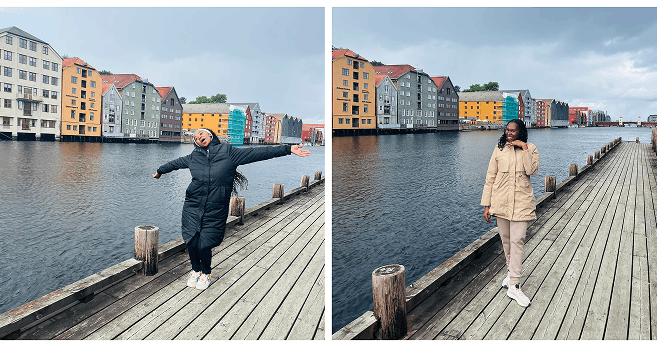
As part of these facilitated research collaborations, UKZN’s Social Work Master’s students, Ms Lethu Mahlangu and Ms Mandisa Nyandeni have been afforded the opportunity to build their research capacity and prepare for sustainable and adaptable careers through a nine-month exchange programme at the Norwegian University of Science and Technology (NTNU).
Reflecting on the experience, Mahlangu and Nyandeni said it strengthened their interest in childhood studies, child protection and children’s rights.
“The experience strengthened our interest in childhood studies, child protection and children’s rights. It helped us identify areas in which we would like to specialise and enhanced our confidence as aspiring researchers. The research skills and knowledge we gained have motivated us to pursue further academic research focused on children, families, communities and policies that affect children’s lives,” they said.
UKZN Social Work lecturer, Dr Maud Mthembu, said it is crucial that students learn across different socio-cultural and economic contexts while also sharing knowledge and perspectives from their own backgrounds. She said: “As child protection is a core area of social work practice, the NTNU academic programme [a long-standing academic partnership between UKZN and NTNU] helps students develop critical skills in examining how childhood is understood and experienced in different settings.”
Mthembu said the duo had a strong interest in child-related research and possessed the academic ability and personal maturity required to manage both the academic workload and an extended period away from home.
The students said the exchange programme also contributed significantly to their personal growth. “The experience has taught us how to adapt to new environments, communicate effectively with people from different cultural backgrounds, and become more independent and resilient,” added the duo.
Mthembu noted that the academic environment at NTNU differs from that at UKZN by placing a stronger emphasis on interdisciplinary learning, critical thinking and research. She said the programme exposes students to childhood studies as a field that critically examines children’s experiences, agency, participation and rights.
“This programme encourages students to question taken-for-granted assumptions about childhood and child protection and to engage with these issues from a more reflective perspective. As young social workers, these skills will help them become competent and reflective professionals.”
Discussing the most valuable aspects of the exchange programme, Mahlangu and Nyandeni said that engaging with new theories and research methodologies strengthened their understanding of child-centred and ethically sound research.
The students noted that discussions at both institutions reflected a shared interest in understanding South African family life, community dynamics, social welfare programmes and the realities of working with children and families.
The students admitted that adapting to life in Norway presented challenges. Beyond homesickness, they were surprised by cultural differences, including what they perceived as a greater sense of individualism and less frequent social interaction among strangers. They overcame these challenges by building friendships and professional networks with fellow students and academics, and by participating in social and cultural activities such as hiking, skiing and exploring Norwegian culture.
Exposure to international conferences, research workshops and diverse academic communities required the students to communicate confidently and remain open to new ideas.
Words: Sinoyolo Mahlasela
Photographs: Supplied