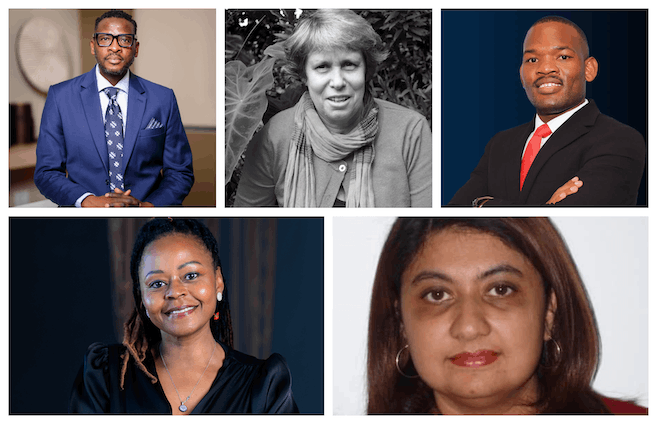
Most of the complaints received by the South African Human Rights Commission relate to service delivery, socio-economic rights and discrimination.
This is according to a Commissioner from the South African Human Rights Commission Professor Tshepo Madlingozi, who delivered the keynote address at the University of KwaZulu-Natal’s (UKZN) Human Rights Day online seminar.
Madlingozi, an alumnus of the University of Pretoria and the University of London, noted that the prevalence of the complaints demonstrated that social justice in South Africa remained deeply “gendered and racial”.
The webinar, themed: ‘Deepening a Culture of Social Justice and Human Rights’, focused on fostering social cohesion, promoting constitutional values, and addressing systemic inequalities, with particular emphasis on combating racism, xenophobia, and gender-based violence (GBV).
In his address, Madlingozi unpacked several critical concepts, including neo-apartheid, the national question, and internalised xenophobia. He reflected on the significance of the moment, noting that the webinar was taking place 30 years after the adoption of South Africa’s Constitution, the establishment of the Truth and Reconciliation Commission (TRC) and the introduction of the Growth, Employment and Redistribution (GEAR) programme.
Responding to Madlingozi’s reflections on neo-apartheid and contemporary inequalities, UKZN’s Professor Ann Strode agreed that socio-economic equality remained unresolved.
“This is one of the most significant challenges we face going forward. It is wealth that protects you in South Africa,” she said, adding that structural frameworks perpetuating inequality are areas in which the State has been complicit.
PhD candidate and lecturer at UKZN Mr Celinhlanhla Magubane shared this quote from Madlingozi’s doctoral thesis: “We remain committed to a struggle for a world in which everyone counts”.
“It remains highly relevant,” said Magubane, noting that the assessment spoke directly to social cohesion, xenophobia and broader human rights concerns. He added that social justice was fundamentally about ensuring that those who were historically marginalised were equally protected by the law, echoing concerns that insufficient progress had been made in addressing past injustices.
Executive Director of Corporate Relations at the University Ms Normah Zondo highlighted the importance of the dialogue, stating that it sought to “confront the systemic inequalities that continue to shape the lived realities of so many”.
Zondo emphasised the role of universities as spaces that must “think critically, engage meaningfully, and contribute to solutions that are both thoughtful and practical”.
Facilitator Dr Lubna Nadvi, a Political Science and International Relations lecturer, underscored the importance of sustaining a strong human rights culture, particularly given South Africa’s history of anti-apartheid struggle.
Closing the webinar, Ms Xoliswa Zulu thanked the speakers for their powerful and thought-provoking contributions and acknowledged all those who contributed to the event’s success.
“Conversations like these only have impact when they are heard, shared, and carried forward,” Zulu concluded.
- The discussion is available on the University’s YouTube page.
Words: Raylene Captain-Hasthibeer
Photographs: Supplied