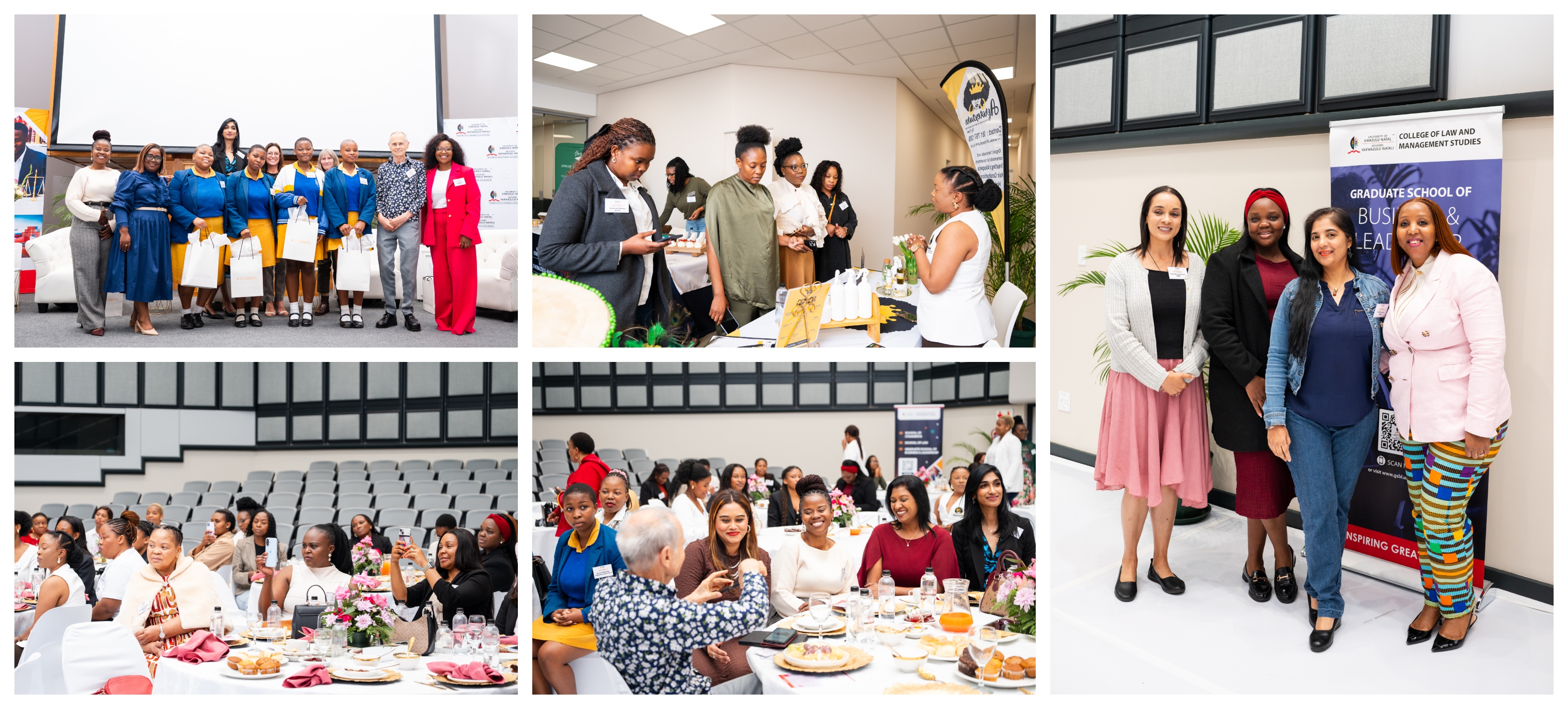
Trailblazing women in Local Economic Development (LED) came together at the recent University of KwaZulu-Natal (UKZN) Graduate School of Business and Leadership (GSB&L) Power Connect Business Breakfast, held under the theme ‘Imbokodo: Women in Local Economic Development’.
The event brought together leaders, entrepreneurs and practitioners to recognise the contribution of women to LED and create a platform for dialogue on strengthening local economies and creating sustainable opportunities for communities.
In his welcome address, Executive Director and Head of the GSB&L, Professor Serestina Viriri, highlighted the importance of creating platforms that connect leadership, entrepreneurship and LED.
“Women are at the forefront of driving inclusive growth and building resilient communities. Such platforms allow us to recognise their contribution while creating meaningful conversations that can translate into action and impact,” said Viriri.
He added that the GSB&L remained committed to equipping professionals with the knowledge, skills and networks needed to respond to challenges and make a meaningful impact in their organisations and communities.
The panel discussion was facilitated by Dr Xoliswa Majola, senior lecturer at UKZN’s School of Commerce, and featured Ms Judy Stuart, founder and CEO of Future Farmers Foundation; Ms Bongiwe Nyawo founder and Director of Nyawo Zendalo Air; Ms Lana Meyer CA(SA), Acting Chief Executive Officer of the KwaZulu-Natal (KZN) Growth Fund Agency; and Ms Seshnee Govender, founder and Director of Seshnee Govender and Associates.
A key focus of the discussion was how entrepreneurs and LED practitioners can move beyond identifying community needs to develop practical, sustainable solutions. The panel also explored how technology, skills and innovation can help ensure LED remains relevant to the next generation.
Drawing on her experience in community-based agricultural development, Stuart highlighted the importance of equipping young people with the skills and support needed to become active participants in the economy.
“The foundation of starting a farming business for me was passion, but over the years I have realised the importance of education, local knowledge, mentorship and technical training. We need to equip young people and communities to become not only beneficiaries, but owners and leaders, which is what our foundation focuses on,” she said.
Nyawo, whose work combines agriculture, sustainability and technology, emphasised the role of innovation in addressing local challenges. She said technology should be used alongside knowledge and skills to create opportunities for young people.
“We cannot speak about the future of local economic development without speaking about young people. We need to create pathways that allow young people to move beyond being beneficiaries and become owners of solutions. Technology can help us do that, but it must be combined with knowledge and skills,” she said.
The discussion also addressed a common challenge facing LED initiatives: moving beyond the idea and funding stages towards implementation and long-term sustainability.
Meyer emphasised that being ready for funding required more than having a good idea. “Being funding-ready means being able to demonstrate that your business model works, that your finances are in order and that you understand the market you are operating in. Funders need to see not only the potential for impact, but also a credible pathway to sustainability and growth,” she said.
She encouraged entrepreneurs to understand the different financing options available and to establish sound financial, governance and operational systems that can support growth.
Legal compliance was also identified as an important part of building sustainable enterprises. Rather than viewing compliance as an administrative burden, the panel encouraged entrepreneurs to make it part of their business strategy from the outset.
Govender highlighted the role of compliance in protecting businesses and strengthening their credibility.
“Legal compliance should not be something entrepreneurs think about only when something goes wrong. It needs to be built into the business from the beginning. When compliance is treated as part of the strategy, it protects the business, builds credibility and creates a stronger foundation for growth,” she said.
The discussion highlighted the importance of identifying opportunities rooted in local needs, developing practical and sustainable solutions, preparing young people for leadership, understanding funding requirements and building compliant businesses.
Closing the event, Dr Mlondi Vilakazi, Project Manager for the Regional and Local Economic Development Initiative (RLEDi), emphasised the value of creating spaces where practitioners can share knowledge, challenge conventional approaches and develop practical responses to local challenges.
He also stressed the importance of continued collaboration and dialogue in advancing LED initiatives and strengthening their impact across KZN.
The event featured an exhibition of female owned businesses that are run by LED Champions of the GSB&L.
Words: Ayanda Radebe
Photographs: Hesper Media