The latest State of the World’s Plants and Fungi 2026 (SOTWPF) report, released by the Royal Botanic Gardens, Kew on 16 June, reveals that the true scale of the global biodiversity crisis remains poorly understood, but that rapid advances in technology are offering new hope for conservation.
Compiled by more than 400 scientists from 40 countries, the sixth SOTWPF report explores how artificial intelligence (AI), digitisation and global data-sharing are transforming efforts to document and protect the world’s plants and fungi.
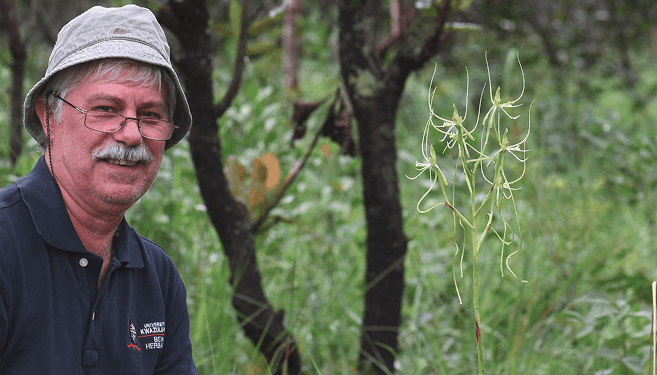
Among the contributors is Professor Benny Bytebier of the University of KwaZulu-Natal (UKZN), curator of the Bews Herbarium in Pietermaritzburg. More than a century old, the herbarium houses over 250 000 plant specimens, including flowering plants, seed plants, ferns and seaweeds.
Since 2016, Kew has co-ordinated these authoritative reports to assess current knowledge of plant and fungal diversity, the threats these organisms face, and policies needed to safeguard them. Plants and fungi underpin life on Earth by regulating climate, storing carbon and providing food and medicines. The report warns that without reliable data on species diversity, distribution and climate impacts, conservation efforts may overlook vulnerable species and miss opportunities to discover new medicines and future crops.
A major focus of this year’s report is the growing role of technology in addressing these challenges. For centuries, preserved plant and fungal specimens collected worldwide were accessible only to a limited number of researchers. Today, millions of specimens are being digitised and analysed on an unprecedented scale, allowing scientists to compare collections remotely, correct misidentifications and uncover previously hidden biodiversity.
Despite this progress, fewer than 16% of the world’s herbarium specimens have been imaged and made digitally available. The report highlights significant gaps in the Global South, where under-digitised collections can distort biodiversity models and conservation planning.
This makes the Bews Herbarium’s recent digitisation efforts particularly significant. In collaboration with the Natural Science Collections Facility, all 250 000 specimens have been imaged, while 25% of specimen labels have been transcribed and incorporated into a searchable database. The collection has expanded from about 120 000 specimens 15 years ago to more than 250 000 today through the incorporation of several ‘orphaned’ herbaria from across KwaZulu-Natal.
Bytebier also recently collaborated with colleagues from the South African National Biodiversity Institute (SANBI), Mauritius, Madagascar and Belgium on research examining the digitisation of herbarium collections in Africa and the Western Indian Ocean region. The report recognises his role in establishing and expanding the Western Indian Ocean Island Herbarium Network and advancing the digitisation of regional collections.
The report further reveals that biodiversity loss may be far greater than previously recognised. Currently, 29 748 plant species and 411 fungal species are considered threatened with extinction, yet only 18% of plant species and 0.6% of fungal species have been formally assessed. While fewer than 1 000 plant species have officially been declared extinct, many others may have disappeared before they were ever documented. Scientists estimate that more than 100 000 plant species and over two million fungal species remain unknown to science.
Bytebier said: “This report is very important as it summarises how we are doing with describing, documenting and conserving our plants and fungi at a global scale. I’m happy that the Global North takes notice of our efforts in digitising the rich biodiversity in the Global South, despite the challenges and lack of resources.”
The report concludes that improving, connecting and sharing biodiversity data globally is one of the fastest and most cost-effective ways to strengthen conservation efforts. By linking herbaria, seed banks and conservation management systems, researchers can improve decision-making and enable more targeted action to prevent extinctions. It emphasises that equitable data-sharing, standardisation and training are essential to ensure that AI and digitisation help address – rather than reinforce – existing gaps and inequalities in biodiversity knowledge.
Words: Christine Cuénod
Photograph: Supplied