
ULPDO Hosts 5th Biennial Language Research Symposium 2023
- Posted by ukzn-admin
- Categories News
- Date October 13, 2023
ULPDO Hosts 5th Biennial Language Research Symposium 2023
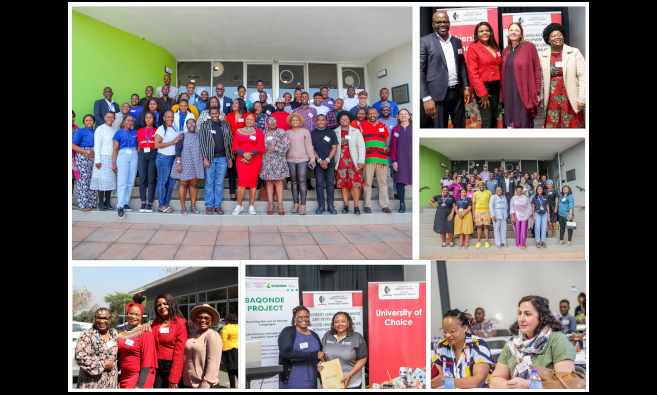
The University Language Planning and Development Office (ULPDO) collaborated with the Discipline of African Languages to host the 5th Biennial Language Research Symposium on the Howard College campus.
The theme of the two-day symposium was Elevating the Status and Advancing the Use of Indigenous Languages as Languages for Teaching, Learning and Research in Higher Education Institutions. It was attended by language scholars, project leaders, activists and researchers from UKZN, the University of the Witwatersrand (Wits) and the University of the Free State (UFS).
First hosted in 2015, this symposium aims to promote the science of intellectualising underdeveloped languages. The UKZN Language Policy and Plan, which is under review, has been functioning through bilingualism while advocating for multilingualism to promote equitable teaching and learning in Higher Education.
In his opening address, Deputy Vice-Chancellor for Teaching and Learning, Professor Sandile Songca said the meeting was a significant advancement in the professionalisation of African languages, particularly their application in teaching and learning in Higher Education. ‘Our main focus should be to teach and learn in our mother tongue because this will remove the learning barriers and repurpose African people’s learning, teaching and research enterprise across the continent. At present, this enterprise is mainly purposed by other cultures to focus on things that may not be our primary focus if we were to teach, learn, research and communicate in other spheres in our mother tongue.’
Programme director for Day One, lecturer in Management and Entrepreneurship Dr Lindiwe Kunene said the development of indigenous languages for business learning is taken seriously as it is evident that students comprehend more when taught in their own language.
Keynote speaker on the first day, Associate Professor in African Languages at Wits Professor Bonisiwe Zungu addressed Knowledge Construction and Proper Understanding of African Epistemologies in Higher Education Institutions. She highlighted the need to decolonise the curriculum, intellectualise African languages, and reconceptualise and operationalise concepts and themes in African languages. ‘We live in an era of the Fourth Industrial Revolution and Artificial Intelligence and as scholars, academics and custodians of languages we need to be well-versed in understanding these scientific terms and unpack them in a way that they work for us. There has to be a radical transformation of old patterns on how we harvest information, construct knowledge and in the process construct meaningful African epistemologies while ensuring that meaning is not lost in translation.’
Zungu added that the notion of African Languages at the core of the academic exercise only exists on paper at many institutions. While some academics have responded positively, others perceive the African language project as a tedious task that takes away space for more relevant courses. Language symposia and seminars are required to change such perceptions as ‘When students learn in their mother tongue they are in a better position to apply the skills they have gained.’
Keynote speaker on the second day, Director of the Academy for Multilingualism at the UFS Dr Nomalungelo Ngubane focused on centering multilingualism in Higher Education. She noted that African languages remain an academic support language in this sector and that multilingualism has been around since African languages were recognised. Ngubane argued that Afrikaans developed into an academic language within a short period of time as resources were made available and policies changed for enforcement and asked why the same cannot be done for African languages. She highlighted the power of language as tool to conquer academia, colonise other languages and a weapon to include/exclude others. The UFS has implemented multilingualism in learning and teaching by developing Sesotho and IsiZulu as academic languages. This will promote epistemological access and success. Ngubane concluded by asserting that, ‘It is through language that we become most creative, innovative and progress as humanity.’
Academic Leader for African Languages, Linguistics and Development Modules at UKZN Dr Gugu Mazibuko briefly introduced BAQONDE, a collaborative project between European and South African Higher Education Institutions to facilitate and promote the use of indigenous African languages as a medium of instruction in tertiary education. ‘BAQONDE is a catalyst for action that will build capacity among lecturers and students in South African tertiary education,’ she said.
Director of the ULPDO Mr Khumbulani Mngadi commented: ‘UKZN has made significant strides in developing African languages especially in the isiZulu language. In the new language policy, we have proposed the inclusion of Sesotho and SA sign language as we are shifting from a bilingual to multilingual language policy in 2023. Of course, we need to develop these languages and migrate them to digital spaces so they can be more appealing to young people.’
Words: Zama Khoza
Photographs: Andile Ndlovu

You may also like

Public Lecture on BRICS Plus Dispels Misconceptions

