
UKZN Students Represent SA at Next Generation Digital Action Programme in Denmark
- Posted by ukzn-admin
- Categories News
- Date February 20, 2026
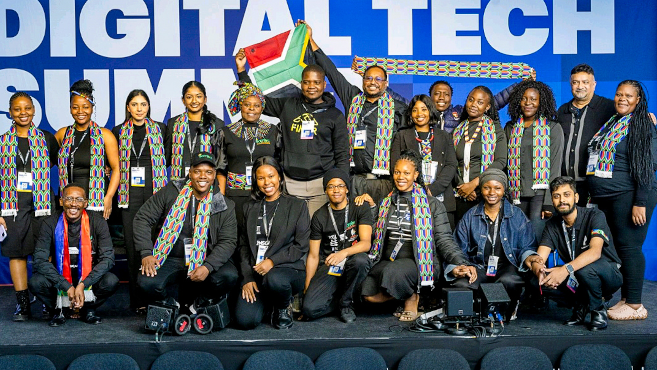
UKZN postgraduate students represented the University and South Africa at the Next Generation Digital Action (NGDA) Programme in Copenhagen, Denmark, in November last year.
The solutions presented were developed over a six-month period through intensive challenge-based research and design, including a month of structured innovation training hosted by the Technical University of Denmark (DTU). Aligned with the Digital Tech Summit and facilitated by iLambu Global, the programme featured emerging academics from across the world who co-developed digitally enabled responses to urgent societal and infrastructure challenges.
The UKZN delegation formed part of multidisciplinary South African teams addressing four global challenges: nature-positive urban infrastructure (Challenge 1); citizen science for water loss management (Challenge 3); data-driven water security in rural India (Challenge 5), and financial transparency in public works (Challenge 6).
Students also participated in an Ecosystem Day, interacting with researchers, entrepreneurs, and industry leaders through visits to the Novo Nordisk Foundation, NIRAS Green Tech Hub, and Ramboll, providing insight into how cross-disciplinary collaboration supports the translation of digital innovation into practical, scalable solutions.
Challenge 1: Nature-Positive Urban Infrastructure
UKZN students Ms Venessa Mabuza (PhD in Human Sciences) and Ms Anda Maphoi (Master of Information Systems and Technology) contributed to Challenge 1: Reshaping Existing Infrastructure to Nature-Positive Urban Areas. The challenge examined how digital technologies and systems thinking can integrate nature-based solutions within established urban infrastructure. Drawing on human sciences, information systems and design perspectives, the team proposed approaches to transition cities away from resource-intensive grey infrastructure, emphasising modular interventions, data-enabled planning tools, and policy-aligned frameworks that support urban resilience, ecological restoration and long-term sustainability across diverse metropolitan contexts.
Challenge 3: Citizen Science and Water Security
Ms Ameera Yacoob (PhD in Hydrology) was the team lead for Challenge 3: Citizen Science Supporting Water Loss Management, representing UKZN as part of Team LeakNet. The challenge explored how digital tools can empower citizens in South Africa to report water losses and influence behavioural change in water-scarce contexts. LeakNet proposes a mobile- and WhatsApp-based platform enabling real-time leak reporting and municipal feedback. Prioritised are accessibility, low data use, community participation, and improved maintenance response within urban and peri-urban municipalities nationwide to strengthen accountability and support sustainable local water governance systems.
Challenge 5: Data-Driven Water Security in Rural Contexts
Ms Ntombifuthi Vilakazi (PhD in Hydrology) was team lead for Challenge 5: Data-Driven Water Security and Safety in Rural India, contributing to solutions addressing groundwater depletion, water quality monitoring, and community-led governance. Vilakazi’s team advanced to the finals and received the national award for South Africa, recognising the solution’s innovation and relevance. Combining hydrology, data science, and citizen engagement, the work demonstrated how inclusive digital platforms can support sustainable water decision-making in underserved rural communities facing long-term water insecurity.
Challenge 6: Digital Innovation for Transparency and Accountability
Student team lead Mr Verlan Moodley (PhD in Physics), Ms Gabrielle Jade Reddy (Honours in Information Systems), and Mr Ayanda Mpanza (Honours in Commerce: Supply Chain Management) contributed to Challenge 6: Financial Transparency in Public Works. Working as Team OpenLedger, they developed a blockchain-enabled platform to improve traceability and accountability within public procurement systems, with Bogotá used as a case study. The solution structures financial records, secures transaction histories and supports oversight mechanisms that enhance transparency, reduce corruption risk, and strengthen public trust in expenditure management processes across complex governmental institutions and multi-level administrative environments internationally today.
A Shared Learning Experience
UKZN students described the NGDA Programme as intellectually rigorous and professionally transformative. All teams took part in the semi-finals and exhibited their work at the DTU Tech Bazaar and Digital Tech Summit, engaging with global researchers, industry leaders and policymakers. Supported by iLambu Global, the experience strengthened international networks, sharpened applied research skills and reinforced ethical innovation principles. Students returned to South Africa with renewed purpose, reflecting UKZN’s commitment to producing globally engaged graduates equipped to address complex sustainability challenges through responsible digital action.
UKZN Students at the AWSiSA Summit 2025
UKZN students Yacoob, Reddy, Mpanza, Mabuza, and Vilakazi attended the AWSiSA Summit 2025 together, following their participation in Denmark. Supported by iLambu Global, their presence enabled continued engagement with national water sector stakeholders. Exhibiting through the Water Research Commission platform and participating in knowledge-exchange spaces, students shared digital solutions developed during the NGDA programme while gaining grounded insight into South Africa’s operational realities of water management.
Presentations within the exhibition space and engagement at the Wetskills workshop highlighted how innovation is tested, refined and contextualised within practice. Discussions emphasised the importance of data quality, operational workflows, community trust and institutional transparency in translating digital tools into impact. The summit reinforced the value of sustained academic-industry collaboration and demonstrated how global learning experiences can meaningfully inform national development priorities within South Africa’s evolving water governance landscape.
Words: NdabaOnline
Photograph: Supplied


