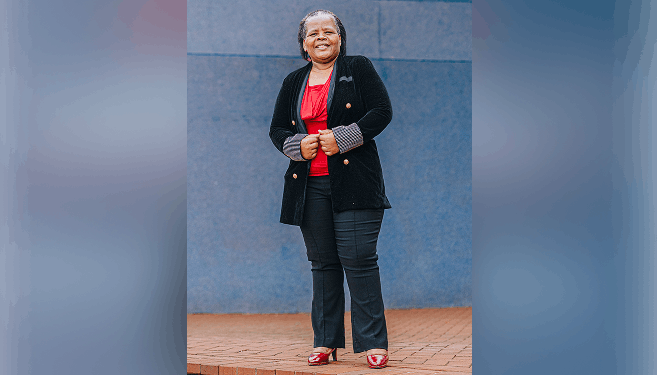
The University of KwaZulu-Natal’s (UKZN) Professor Zanele Ngcobo from the School of Education has been appointed to the seventh administration of the Umalusi Council by the Minister of Basic Education.
The appointment recognises Ngcobo’s longstanding commitment to educational excellence, quality assurance, teacher development and research, while positioning UKZN at the forefront of national conversations on improving education standards.
As South Africa’s Council for Quality Assurance in General and Further Education and Training, Umalusi plays a pivotal role in safeguarding the credibility, integrity and quality of the country’s qualifications. The Council provides strategic oversight of quality assurance processes and ensures that qualifications awarded within the education and training sector meet nationally and internationally recognised standards.
Ngcobo described the appointment as both an honour and an opportunity to contribute meaningfully to strengthening South Africa’s education system.
“My academic and professional work aligns strongly with Umalusi’s mandate. As a Mathematics Education scholar, teacher educator and Head of Department, I have dedicated my career to advancing educational quality through research, curriculum development, teacher preparation and assessment innovation,” she said.
Ngcobo’s previous service on the Umalusi Accreditation Committee and various school governance committees has equipped her with valuable insight into the country’s quality assurance landscape, reinforcing her commitment to ensuring that educational standards remain rigorous, relevant and responsive to the needs of learners and society.
Ngcobo believes the appointment represents not only an opportunity to serve the nation but also to continue learning and growing within the education sector. She acknowledged that South Africa continues to face significant challenges, including inequalities between schools, disparities in access to resources and technology, low learner achievement in mathematics, science and literacy, and the ongoing need for meaningful teacher professional development.
Addressing these issues would require a collaborative and systemic approach involving government, universities, schools, professional bodies and communities.
According to Ngcobo, “Quality and equity should not be viewed as competing goals but as complementary pillars of educational transformation,” emphasising that educational reforms must be informed by robust research while remaining grounded in classroom realities.
Ngcobo expects the appointment to strengthen the relationship between educational policy, quality assurance and academic practice. Exposure to national educational priorities and emerging trends will, she believes, enrich her teaching by preparing future educators with a deeper understanding of quality assurance, assessment and educational leadership.
Her passion for education extends beyond professional responsibility. She remains motivated by a deep belief in education’s power to transform lives and society.
“Education remains one of the most powerful instruments for social transformation,” she said. “It creates opportunities, reduces inequalities and empowers citizens to contribute meaningfully to society.”
She hopes to help create learning environments where every learner, regardless of background, has access to meaningful educational opportunities and the support needed to realise their full potential.
“The future will require innovative pedagogies, strong teacher preparation programmes and assessment systems that support deep learning rather than rote performance,” she said. “It will also require sustained efforts to address historical inequalities and ensure that quality educational opportunities are available to all learners, regardless of their socio-economic circumstances.”
Expressing gratitude to the University, Ngcobo described the appointment as both a personal milestone and a testament to the role universities play in shaping national education policy and quality assurance.
Words: Sinoyolo Mahlasela
Photograph: Supplied