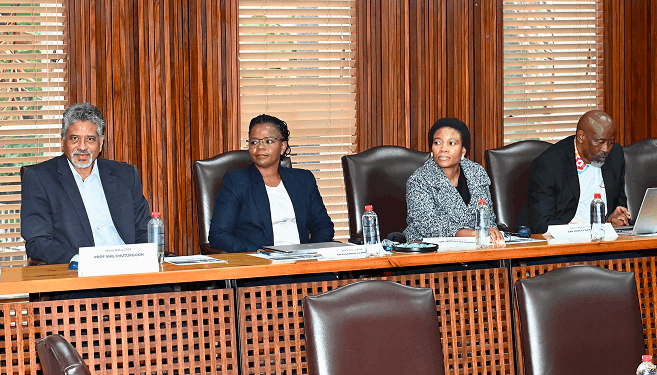
The University of KwaZulu-Natal (UKZN) marked World Intellectual Property Day 2026 with a compelling showcase on how sport is evolving into a powerful intellectual property (IP) asset, aligned with the global theme ‘IP and Sports: Ready, Set, Innovate’! led by the National Intellectual Property Management Office (NIPMO).
Hosted on the Westville campus, the event brought together academics, legal experts, industry leaders and students to explore how IP is transforming sport into a driver of innovation, revenue and institutional growth.
Facilitator Professor Rowena Naidoo, Academic Leader for Sport Science, highlighted the often-overlooked connection between sport and IP: “Intellectual property is far more connected to sport than we actually appreciate.”
Opening the session, UKZN medical biochemist and Deputy Vice-Chancellor: Research and Innovation (Acting), Professor Anil Chuturgoon stressed that modern sport extended far beyond physical performance: “Sport is no longer just about performance – it is about technology, branding and data.”
Chuturgoon positioned universities as critical players in this ecosystem, urging researchers and students to become more “IP savvy” in recognising and protecting their innovations.
From an institutional perspective, UKZN Director of Innovation and Entrepreneurship at the Division of Research and Innovation, Dr Nqobile Gumede described the University’s Innovation and Entrepreneurship Centre as a catalyst for commercialisation: “We are building a commercial bridge – turning research into market-ready products and partnerships.”
National insights from NIPMO’s Ms Lindiwe Mashimbye reinforced the foundational role of IP in sport:
“IP rights form the base for commercial value in sport,” said Mashimbye who illustrated how patents, trademarks, designs and copyright work together: “The patent protects the technology, the design protects the look, the trademark protects the brand, and copyright protects how it is marketed.” Mashimbye also emphasised the purpose of the (Intellectual Property Rights) IPR Act: “Publicly funded intellectual property must be protected and commercialised for the benefit of society.”
Legal expert Mr Patrick O’Brien from Spoor & Fisher, highlighted the commercial scale and legal nuances of IP in sport: “Design protection can fill gaps that neither copyright nor trademark will cover.”
O’Brien warned organisations against delayed protection: “Early trademark filing is non-negotiable.”
He further underscored enforcement value, noting that millions of rands in counterfeit goods were seized annually – made possible only through IP protection.
From UKZN Sport, Mr Zweli Sapula delivered a pivotal message: “Sport at UKZN is no longer an activity – it is an institutional asset.” Sapula linked sport directly to student success and institutional growth: “We are taking care of the whole student – academically, personally and athletically.”
With 85% retention and 78% graduation rates among student-athletes, UKZN is leveraging sport as both a developmental and strategic tool, while aiming to further improve outcomes.
Said Sapula: “We cannot rely solely on institutional funding – we must commercialise what we have.”
Industry perspective from, Durban City Football Club Chairman, Mr Farook Kadodia, showcased how IP drives modern sports business models: “We are not building just a team – we are building an ecosystem that generates value.”
He reframed sport through an IP lens: “Every match is content, every player is a brand, and every fan is a stakeholder.” Kadodia pointed to untapped potential in South Africa’s sports market: “The audience exists, what’s missing is the structure to monetise it effectively.”
The event concluded with a unified message: IP is not just a legal safeguard, but a strategic growth tool. As Naidoo reflected: “IP is not only about protection – it’s about recognising value and using it responsibly.”
Gumede echoed this forward-looking perspective: “The real value lies in what happens after this – how we apply these ideas.”
Words: Nombuso Dlamini
Photograph: Albert Hirasen