UKZN and the University of Glasgow Announce Joint Research Programme in Space Engineering
The University of KwaZulu-Natal (UKZN) and the University of Glasgow have initiated a new research partnership for the development of space propulsion technologies.
The collaboration has been made possible by the UK Government which is providing R2 million in funding to support the technology programme through the UK’s Department of Science, Innovation and Technology (DSIT).
It will see researchers from the University of Glasgow’s Space and Exploration Technology Group working with propulsion engineers from UKZN’s Aerospace Systems Research Institute (ASRI) to improve metal additive manufacturing techniques, also called 3D printing, for rocket engine components.
Both institutions have experience in designing, building and testing rocket propulsion systems.
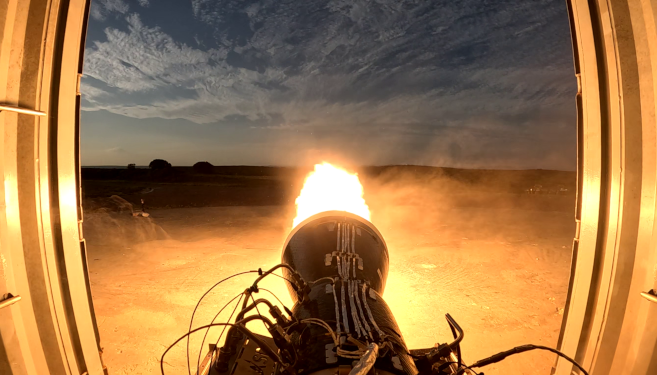
ASRI develops hybrid rockets and liquid propellant engines, as well as on-orbit satellite thrusters. The institute’s research activities are funded by the South African Department of Science, Technology and Innovation (DSTI).
ASRI currently holds the African altitude record for hybrid rockets, set in 2021, and is developing the SAFFIRE liquid propellant rocket engine to power an indigenous satellite launch vehicle.
University of Glasgow researchers have an active propulsion engineering programme that includes a vibrant student rocketry society. Among its various activities, the university is currently developing a cryogenic bipropellant rocket ground test facility at Machrihanish in Scotland.
ASRI Director, Professor Michael Brooks, described the collaboration as an important step in broadening aerospace engineering research and development collaboration between South Africa and the United Kingdom.
‘We’re delighted to begin this joint R&D programme with the University of Glasgow,’ he said. ‘Developing rocket technologies, and the ground systems to support commercial launch, is complex and time-consuming, and there are advantages to pooling resources and working with institutions that have similar ambitions. ASRI will be working closely with University of Glasgow engineers to solve some of the challenges facing the aerospace industry in the area of metal 3D printing.’
The Space and Exploration Technology Group’s leader, Professor Patrick Harkness, said, ‘There are striking similarities between the development journeys at the University of Glasgow and UKZN. We encountered many of the same issues as we set up our capabilities, and we have found that we chose to advance in broadly the same way in the past. That is why we are excited to be working together now, and as our ambitions grow and we move towards space, we will be tackling the next set of challenges together.’
Mr Aidan Darker, Head of the Africa Science and Innovation Network at the UK High Commission in Pretoria, commented: ‘The UK government is delighted to support this project, further strengthening the SA-UK science and research relationship in this key area of mutual interest. We hope this will lead to further collaboration between the UK and SA in the space sector and the transfer of expertise between our two countries.’
Words: Sally Frost
Photograph: Supplied