The GNU’s Implications for South Africa’s Democracy
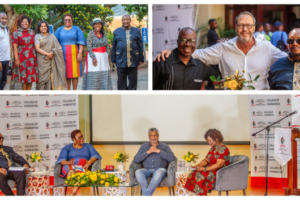
The Government of National Unity (GNU) recently marked its first 100 days in office, prompting UKZN to host a webinar to explore its implications for South Africa’s democracy.
Facilitated by Professor Purshottama Sivanarain Reddy of the Graduate School of Business and Leadership, the panellists included Mr Zakhele Ndlovu and Mr Siyabonga Ntombela, Political Science lecturers; Professor Bonke Dumisa, an independent economic analyst; Dr Simiso Msomi, a lecturer in the School of Accounting, Economics and Finance; and Dr Claire Gaillard, an academic in the Discipline of Social Justice Education.
In her welcome remarks Executive Director of the Corporate Relations Division, Ms Normah Zondo said the GNU’s first 100 days were marked by uncertainty. Reflecting on the strides made, the hurdles overcome and the road ahead, she said the University would not only critically examine the complexity of the new government, but also help society to understand the issues.
Reddy outlined the formation of the GNU following this year’s elections in which no political party won an outright majority.
Commenting on South Africa’s immense challenges which include the heavy burden of social grants, the exorbitant cost of living, poverty, unemployment, inequality and the high crime rate, he questioned if the GNU will be able to provide the ethical, effective and capable leadership required to reverse the country’s tide of decay: ‘The GNU’s work has just begun, and while the honeymoon period may be over, the real challenges lie ahead. The task now is to deliver on the promises made, to reform our governance structures and to lead South Africa into a brighter future.’
Ndlovu highlighted that the GNU is marked by different ethnic groups and cultures working together. He noted that while, as the leader of the new government, the African National Congress (ANC) has been able to maintain its key strategic portfolios, a concern is how parties with such different ideologies will be able to cooperate in the long run. Ndlovu added that party leaders who have secured positions within the GNU will showcase their achievements in order to win support ahead of the next elections.
He expressed the hope that the next elections will be strongly contested ‘because it is not good for our country to have an outright dominant party, as that bred arrogance on the part of the ANC. The formation of the uMkhonto weSizwe (MK) party was a blessing in disguise as it helped take away the ANC’s majority.’
Ntombela examined how provincial governments are adapting and engaging with the GNU. He noted that, with the exception of the Western Cape and KwaZulu-Natal, all provinces are governed by the ANC and pointed to mixed reactions on the part of provincial government leaders to the structure.
Turning to intergovernmental relations, Ntombela said that the relationship between provincial and national governments had shifted due to provincial leaders now having to engage with a broader spectrum of political perspectives instead of a single ruling party at national level. ‘The big question now is who is calling all the shots, as a coalition of parties is making decisions on budget allocations, policy implementation, and national directives, resulting in provincial governments having to adjust their strategies to ensure that all interests are met.’
Dumisa reviewed the economy’s national and global environment and examined whether the GNU is likely to achieve economic growth. Citing alarming statistics, he observed that more than 28 million South Africans are social grant recipients compared to 7.4 million taxpayers. Moreover, the government has incurred debt of R6 trillion that costs more than R1 billion to service, making the country largely unsustainable.
On a more positive note, he observed that, while the rand was on a downward trend prior to the GNU, it had remained steady at less than R18 to the dollar since mid-August and continued to strengthen; the Democratic Alliance’s (DA) endorsement of South Africa’s economic trajectory had created global perceptions of the country’s stability and Eskom celebrated more than 200 days without load shedding. ‘Unity is what South Africa desperately needs,’ said Dumisa. ‘The GNU will succeed until 2029 because it is working and all parties have more than enough reason to want to make it work.’
Msomi argued that no government can be fairly assessed after only 100 days. He noted that South Africa had not achieved economic growth above 3.6% since the 1960s and that countries ruled by dictators are more likely to see a growing economy due to the lack of opposition. He expressed the view that the GNU will not succeed due to the extreme left-wing and right-wing parties being unable to find middle ground – which breeds instability.
Gaillard commented that the GNU had yet to address systematic inequalities, but it had achieved diverse representation of social identities within its structure, which created hope. Examining social justice and its fundamental tenets of human rights and participation, she said strides had been made in handling administrative backlogs within Home Affairs, but much remains to be done in other government spheres such as police stations, hospitals, etc.
Gaillard added that the fact that the GNU includes multiple political parties had opened the door for marginalised communities to be acknowledged, fostering the new government’s fundamental goals of social cohesion and peace building.
Words: Hlengiwe Khwela
Photographs: Supplied