
Opinion: Early Career Scholars Must Shape South Africa’s Long-Term Future
- Posted by ukzn-admin
- Categories News
- Date April 1, 2026
It was both a privilege and a moment of deep reflection to address our Early Career Scholars at the closing session of their recent two-day Indaba. The gathering brought together a promising cohort of emerging academics, alongside mentors and senior scholars, in a collective endeavour to strengthen the intellectual foundations of our institution and, more broadly, to contribute meaningfully to the future of our country and continent.
This engagement comes at a particularly consequential moment in South Africa’s democratic journey. While significant strides have been made since the advent of democracy, the aspirations of many of our people remain only partially realised. Persistent inequalities, high levels of youth unemployment, and the uneven distribution of opportunities continue to pose profound challenges. In this context, the role of higher education – and of scholars in particular – becomes both indispensable and urgent.
The future of South Africa will be shaped not only by political leadership, but by the intellectual leadership that emerges from our universities. It is scholars who generate knowledge, interrogate existing paradigms, inform public policy, and enable society to envision and pursue new possibilities. At a time when the global landscape is increasingly defined by knowledge economies, rapid technological change, and complex social transformations, the responsibility resting on the next generation of academics cannot be overstated.
We must acknowledge, with a measure of candour, that South Africa faces a critical challenge: the need to significantly intensify the development of highly skilled scholars, particularly in areas driven by knowledge production, digital innovation, and information technology. Without such investment, we risk falling behind in a world where national competitiveness is increasingly determined by intellectual capital. However, this imperative must not be narrowly construed. The humanities and social sciences are equally central to this project. For it is through these disciplines that we cultivate the capacity to understand human behaviour, social systems, ethical frameworks, and the deeper questions that define our collective existence.
Indeed, one of the enduring challenges confronting many societies on the African continent is the tendency to operate within short-term political horizons. Sustainable development, however, requires long-term vision – an ability to ask fundamental questions about the kind of society we seek to build, and the values that will underpin it. The humanities and social sciences are uniquely positioned to advance this project. Through fields such as political science, psychology, sociology, and the broader study of human wellbeing, these disciplines provide the intellectual tools necessary to navigate complexity, foster social cohesion, and advance ethical and inclusive forms of development.
Yet, scholarship must never become detached from the lived realities of our people. Knowledge production, in its highest form, must translate into social impact. It must speak to the conditions under which people live, particularly those who remain marginalised. I therefore challenged our Early Career Scholars to reflect critically on the relevance of their work: to consider how their research engages with the lived experiences of communities across the country, and especially with the circumstances of young people growing up in environments marked by hardship and limited opportunity. The question we must continually ask ourselves is this: how does our scholarship contribute to improving the quality of life of those who need it most?
At the same time, I expressed a deep sense of confidence in the scholars who participated in this programme. They represent a new generation of academic leadership – one that is intellectually capable, socially conscious, and poised to make a meaningful contribution. To work within the academy is a profound privilege. It is a space that only a small proportion of society is able to enter, and an even smaller number are able to shape. This privilege must be accompanied by humility, and by an unwavering commitment to serve the broader public good.
The Early Career Scholars Programme itself stands as a testament to the University’s commitment to nurturing emerging talent. Through structured mentorship, research development support, and collaborative engagement, the programme plays a vital role in strengthening the research capacity of the College of Humanities and in cultivating scholars who will carry forward the intellectual mission of the institution. Such initiatives are essential if we are to build a sustainable and impactful academic community.
During the course of the Indaba, I had the opportunity to engage with the rich and thoughtful discussions taking place among scholars and their mentors. The depth of intellectual engagement and the quality of ideas emerging from these conversations were both encouraging and inspiring. They affirm that we are investing in a cohort of scholars who are not only capable of advancing knowledge, but who are also committed to ensuring that such knowledge serves society in meaningful ways.
As these scholars continue their academic journeys, my message to them remains both simple and resolute: it can be done. Others have walked this path before them, and they too possess the capacity to succeed. What is required is discipline, perseverance, intellectual curiosity, and an enduring commitment to excellence.
In closing, I extend my best wishes to all participants in the Early Career Scholars Programme. Their work holds immense promise – not only for the future of the University, but for the future of South Africa and the African continent. It is through their efforts that we will continue to advance knowledge, deepen understanding, and contribute to the building of a more just, equitable, and humane society.
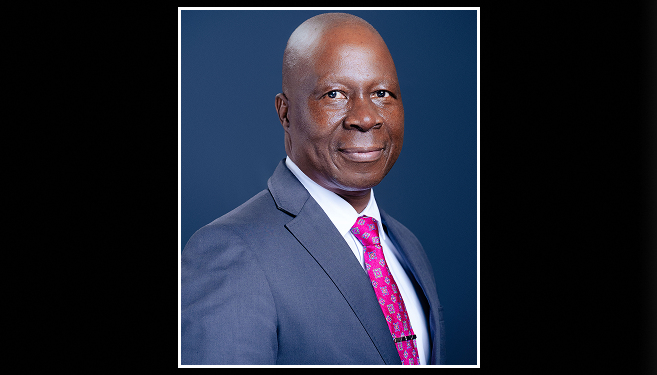
*Deputy Vice-Chancellor and Head of the College of Humanities, Professor Nhlanhla Mkhize.
*The views and opinions expressed in this article are those of the author and do not necessarily reflect the official policy or position of the University of KwaZulu-Natal.
NB: This opinion piece reflects on the project covered in the article titled: ‘College of Humanities Indaba strengthens support for UKZN’s Early Career Scholars’.

You may also like


