
KZN Human Papillomavirus Working Group Launched
- Posted by ukzn-admin
- Categories News
- Date April 17, 2026
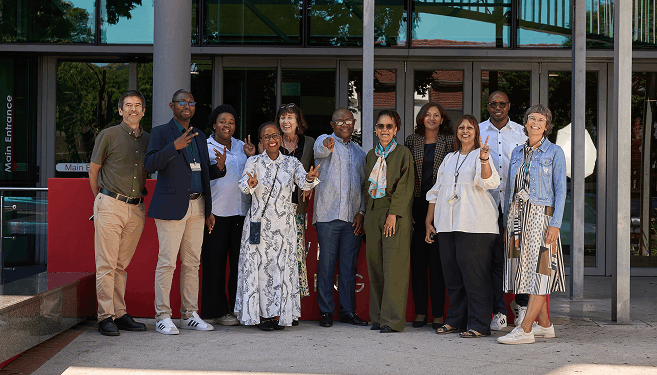
The launch of the KwaZulu-Natal Human Papillomavirus (HPV) Working Group marked an important milestone in the province’s efforts to strengthen collaboration in HPV research, prevention, and treatment.
The two-day event, brought together researchers, clinicians, laboratory scientists and public health experts from the University of KwaZulu-Natal (UKZN), the KwaZulu-Natal Department of Health (KZN DOH), the Africa Health Research Institute (AHRI), the Centre for the AIDS Programme of Research in South Africa (CAPRISA) and the National Health Laboratory Services (NHLS). The launch coincided with International HPV Awareness Day, highlighting the global call to increase awareness and action around HPV, a virus responsible for the vast majority of cervical cancer cases, other anogenital cancers and respiratory and dermatological diseases.
Opening the proceedings, Professor Busisiwe Ncama, Deputy Vice-Chancellor and Head of the College of Health Sciences at UKZN, emphasised the critical importance of HPV research in the South African context. Said Ncama: “HPV research is particularly important in South Africa. Cervical cancer remains one of the leading causes of cancer-related deaths among women, with the burden falling disproportionately on women in low-resource settings and those living with HIV,” she said.
Ncama noted that in KZN, where HIV prevalence is high, persistent HPV infection and progression to cervical cancer occur more frequently and at younger ages. “This makes effective prevention, screening, treatment and community engagement not only a scientific priority, but a public health and social justice imperative.”
“The newly formed Working Group,” Ncama said, “would provide a platform to unite expertise across institutions and disciplines to address these challenges and translate research into meaningful impact.”
A key theme that emerged during the first day was the importance of collaboration. Professor Zaza Ndhlovu, co-chair of the Working Group representing AHRI; noted that while many institutions are working on HPV-related challenges, collaboration has often been limited. “Not a lot of collaboration exists even though we are working on the same issue,” he said, highlighting the need for co-ordinated efforts to maximise impact.
Professor Motshedisi Sebitloane, the co-chair of the Working Group representing UKZN, praised the progress made in the province, encouraging participants to recognise the impact of HPV in all its manifestations. She noted that KwaZulu-Natal had performed particularly well in advancing HPV work, describing Zululand and eThekwini as emerging centres of excellence in the field.
Presentations during the scientific sessions provided insight into the epidemiology of HPV in the province. UKZN’s Dr Siyabonga Dlamini presented data highlighting the most prevalent HPV types associated with cervical cancer.
He highlighted a concerning rise in HPV 35, a high-risk subtype not currently covered by existing vaccines. Among women living with HIV, the prevalence of HPV infection is particularly high, with approximately 67% affected.
Dlamini emphasised the need for vaccines that also target emerging genotypes such as HPV 35 and HPV 51, and called for stronger integration between HPV screening and HIV services. “We require a one-stop approach where HPV screening is integrated directly into HIV care clinics to reach the highest-risk population,” he said.
Screening strategies and policy developments were also discussed. Dr Neil Moran of the KZN DOH outlined progress in validating self-screening methods in the province but stressed that an HPV-positive result alone did not confirm the presence of pre-cancerous lesions.
“A pelvic examination is still required to determine whether pre-cancer changes are present,” he said. He also highlighted the global 90-70-90 targets aimed at eliminating cervical cancer as a public health problem by the end of the century. These targets aim for 90% vaccination coverage, 70% screening coverage and 90% treatment of pre-cancerous lesions, with the ultimate goal of reducing cervical cancer incidence to fewer than four cases per 100 000 women.
He said, “Under South Africa’s evolving screening policy, the country is transitioning toward HPV testing as the primary method for cervical cancer screening. For HIV-negative women, screening begins at age 30 and is repeated every 10 years if results remain negative. Women living with HIV begin screening earlier, from age 25, with testing recommended every five years.”
Data from the NHLS revealed the scale of HPV testing in the province. Mr Marlon Pillay reported that KwaZulu-Natal conducted the highest number of HPV tests nationally between 2024 and early 2026, with 252 366 tests, significantly higher than other provinces.
However, the province also recorded the highest positivity rate at 36.5%. The eThekwini district accounted for the highest number of tests, while Amajuba, Zululand and iLembe recorded the highest positivity rates. The majority of tests were conducted among women aged 21 to 50.
Cancer registry data presented by Dr Nkosana Jafta of UKZN showed that cervical cancer remains one of the most significant health concerns in the country. According to the National Cancer Registry, cervical cancer ranks as the second most common cancer among women in South Africa and the third leading cause of cancer-related deaths.
Research data shared by UKZN’s Professor Veron Ramsuran further demonstrated the strong relationship between HPV, HIV and cervical cancer. In a cohort of 1 541 participants at Inkosi Albert Luthuli Central Hospital in Durban, approximately 57.1% of cervical cancer cases were among women living with HIV, highlighting the intersection between the two epidemics.
Advances in vaccination were discussed by Dr Kathy Baisley of AHRI, who highlighted the shift toward a single-dose HPV vaccine strategy, now being implemented in several countries. Baisley noted that more than 90% of cervical cancer deaths occur in low- and middle-income countries, with South Africa recording 33 cases per 100 000 women and a mortality rate of 19 per 100 000, nearly double the global average.
Dr Maphe Mthembu’s work at AHRI offered important insights into HPV prevalence and genotype distribution among adolescent girls and young women in uMkhanyakude, with and without HIV. She discovered a high overall HPV burden, with a significantly higher prevalence in individuals living with HIV. The genotype profile was diverse, including many high-risk types not covered by current vaccines. Although vaccine-targeted types were not found in likely vaccinated individuals, the continued circulation of other oncogenic types reveals gaps in protection, emphasising the need for broader vaccines and integrated HPV-HIV prevention strategies in high-burden settings.
Discussions also expanded beyond cervical cancer to include the broader impact of HPV. Mr Damian Naidoo, a National Research Foundation (NRF) Fellow at CAPRISA, highlighted the significant burden of HPV among men.
Globally, one in three men is infected with at least one HPV type, with sub-Saharan Africa accounting for approximately 23% of male infections. HPV is linked to 60% of penile cancers, 90% of genital warts and a large proportion of anal cancers.
Naidoo emphasised that gender-neutral vaccination policies would be one of the fastest ways to reduce HPV transmission and meet global health targets.
Concluding the discussions, Dr Nivashnee Naicker of CAPRISA reinforced the importance of continued research and vaccination. “HPV infection is responsible for 95% of cervical cancer cases, and women living with HIV are known to be at six times higher risk of disease,” she said. “The launch of the KwaZulu-Natal HPV Working Group represents a major step toward aligning research, policy and clinical practice across institutions. By strengthening collaboration and sharing knowledge, the partnership aims to accelerate progress toward reducing HPV transmission and ultimately eliminating cervical cancer as a public health threat in KwaZulu-Natal.”
Words: MaryAnn Francis
Photograph: Africa Health Research Institute

You may also like


Bridging the Gap: UKZN and Mseleni Hospital Partner
