Assisted Reproductive Technologies (ARTs) are an essential part of comprehensive oncology care, helping to safeguard patients’ future fertility as some cancer treatments – while highly effective and life-saving – may pose a potential risk to reproductive health.
For patients in rural areas, these challenges are compounded by systemic barriers, limited healthcare infrastructure, and scarce resources. In KwaZulu-Natal, the absence of public fertility clinics means many patients must rely on private services that are prohibitively expensive and largely out of reach, particularly for those facing long travel distances, fragmented referral pathway, and limited access to specialised care.
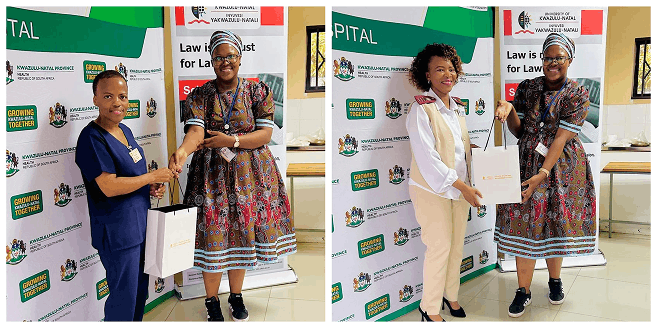
The above intersecting challenges formed the focus of a Research Dissemination Workshop held at Mseleni Hospital in the uMhlabuyalingana District of KwaZulu-Natal. The workshop, a collaboration between the University of KwaZulu-Natal’s (UKZN) School of Law and Mseleni Hospital, aimed to bring research into practical dialogue and to develop advocacy strategies to improve equitable access to fertility preservation. The workshop attracted medical officers, nurses and allied healthcare professionals to discuss strategies for advancing advocacy for fertility preservation technologies for cancer patients and all patients in rural communities.
The study by UKZN Law academic, Ms Nomfundo Mthembu, titled: ‘Perspectives of Medical Officers in Advocating for the Rights of Cancer Patients to Access Fertility Preservation Technologies’, underpinned the workshop, examining the legal, ethical and systemic obstacles rural patients face. She went on to acknowledge and thank the University Capacity Development Programme (UCDP) for supporting this initiative.
Dr Lungile Leslie Hobe, Medical Manager at Mseleni Hospital, thanked the School of Law and highlighted the importance of the initiative: “Mseleni Hospital feels honoured to have been chosen as a site for this research and ultimately the research dissemination workshop. It was eye-opening to learn about medicine from a legal perspective,” said Hobe.
“We acknowledge that health education is advocacy and we envisage informing and educating our patients and communities about assisted reproductive technologies whilst balancing care and safeguarding against any detriment to their overall well-being, taking into consideration the unique socioeconomic challenges faced by patients in rural areas. We look forward to strengthening this collaboration for the benefit of our community and our patients and see this as one of the first steps of the journey of bringing access to fertility treatments in our province for all patients, regardless of their socio-economic status.”
Dean and Head of the School of Law Professor Freddy Mnyongani emphasised the School’s role in translating research into community action: “This initiative aligns with the School of Law’s strategy to promote interdisciplinary, community-engaged research, while also striving to translate scholarly work into practical interventions that benefit communities. I therefore would like to thank Ms Mthembu for leading this initiative, as well as the Mseleni Hospital for its partnership and valuable collaboration.”
Words: NdabaOnline
Photographs: Supplied