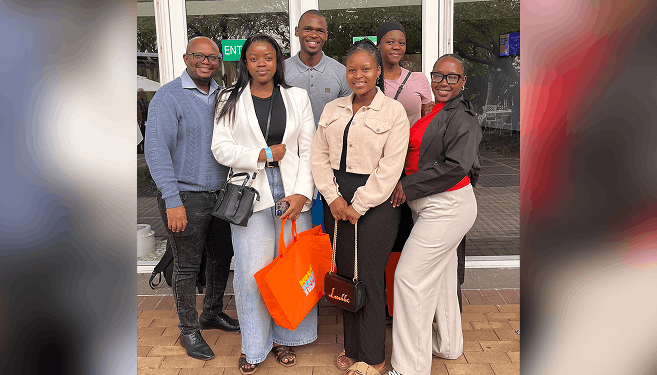
The University of KwaZulu-Natal’s (UKZN) Head of Discipline for Cultural Studies, Media and Fine Arts (CSMFA), Professor Michelle Steward, and Film Studies lecturer Mr Mzwandile Makhanya presented at the inaugural Durban Screen Summit, organised by the eThekwini Municipality Durban Film Office.
The Film Studies programme, housed within the School of Arts in the College of Humanities, aligns closely with the Durban Film Office’s mission of advancing Durban’s creative economy through targeted Development Programmes, funding grants, and strategic partnerships to nurture local talent, driving job creation and aligning with the city’s broader Vision 2030 goals.
The creative arts – including film, digital media, storytelling and other cultural expressions – have long served as a powerful means of fostering identity, dialogue and community development.
The landmark event brought together industry leaders, policymakers, academics, filmmakers, and creative practitioners to engage in critical discussions about the future of the screen and creative industries.
Panel discussions explored topics including animation as an emerging niche for filmmakers, focusing on skills development, industry growth and opportunities for African creatives in local and international markets.
Steward highlighted animation as one of the fastest-growing sectors in Africa’s creative economy, noting that: “The growing adoption of free, cloud-based and subscription-model tools has significantly reduced upfront costs, lowering barriers to entry for emerging practitioners.”
Steward believes that stories can be told at scale without large production crews, making it an accessible entry point for graduates with creative rather than financial resources.
She also addressed the underrepresentation of African animation globally, describing it as a strategic opportunity. She said: “While African storytelling already influences global animation, Africa is not yet owning the platforms or intellectual property (IP) behind that influence, representing a significant niche for African animators to claim with original IP rooted in African stories and cultural traditions.”
As part of his presentation, Makhanya contributed to harnessing Artificial Intelligence (AI) in filmmaking. He detailed the importance of balancing innovation, authenticity, and creativity for emerging filmmakers.
He also highlighted the importance of embracing emerging technologies, including AI, while simultaneously developing enabling policies that address concerns around authenticity, ethics, and intellectual property.
“AI has the potential to reduce some of the financial barriers that have historically limited participation in filmmaking, thereby creating opportunities for African storytellers to share original stories that are waiting to be told,” said Makhanya.
He argued that while AI presents new challenges, it also offers unprecedented possibilities for creativity, accessibility, and innovation within the film industry.
Media and Cultural Studies Honours student Ms Thando Nzuza said the University had given students valuable insight into the industry beyond the theory taught in class.
She said: “It was lovely that we got to network with working directors, producers, and even disability advocates in the film, television and content creation space. Personally, as someone who dabbles in content creation, it’s great to see eThekwini investing in that form of art and somewhat legitimising it.”
Makhanya says he now looks forward to strengthening existing collaborations while exploring new partnership opportunities that will benefit students, industry stakeholders, and the broader creative sector.
Words: Sinoyolo Mahlasela
Photograph: Supplied