Recognising the University of KwaZulu-Natal’s (UKZN) expertise in athlete health, performance and community engagement, the Durban Africa Sports Club (DASC) invited UKZN’s Discipline of Biokinetics, Exercise and Leisure Sciences (BELS) to contribute to its Life Skills Programme: Empowering Women in Sport.
The three-day programme held recently in Chatsworth, brought together young female athletes, coaches and community leaders to explore key topics affecting athlete development, including leadership, sports administration, health, nutrition, anti-doping, gender-based violence, substance abuse, and sports rehabilitation.
The initiative reflects DASC’s commitment to developing athletes beyond the playing field by equipping them with knowledge and life skills that support both sporting excellence and personal wellbeing.
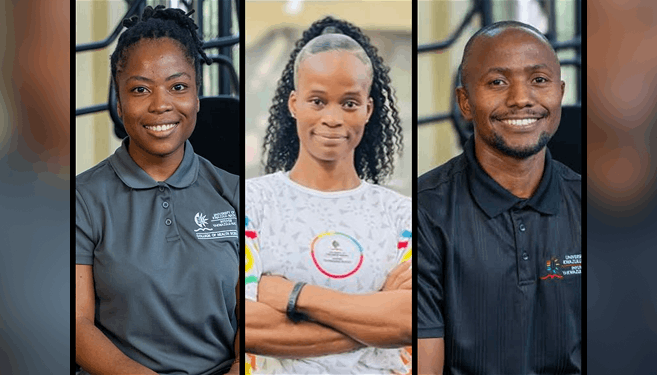
Representing UKZN BELS were Dr Siphamandla Nyawose, Ms Bongiwe Gumede and Ms Zamile Nduli, who shared evidence-based knowledge through engaging and interactive presentations focused on athlete health, conditioning, injury prevention, rehabilitation and nutrition.
Nyawose delivered a keynote presentation titled: ‘Stay in the Game: Sports Injury Prevention, Recovery and Peak Athletic Performance’. Drawing on current research, practical examples and personal experiences in football and coaching, he advised young athletes on injury prevention, recovery, rehabilitation and long-term athletic development. The session explored common sports injuries, injury risk factors and the importance of appropriate recovery practices in supporting consistent, safe and sustainable athletic performance.
The presentation also highlighted some of the unique challenges faced by female athletes, informed by Nyawose’s ongoing research interests in women’s football, particularly in the areas of athlete health, recovery and wellbeing. Participants were encouraged to view sport not only as a platform for competition and achievement but also as an opportunity to develop lifelong habits that support health, resilience and personal growth.
Gumede, an Academic Development Officer within BELS, delivered a presentation on sports nutrition for young athletes. The session focused on educating learners on the importance of healthy eating, hydration and nutrition habits that support sports performance, growth and overall wellbeing. The audience consisted primarily of girls aged 12 to 15 from underprivileged schools who participated mainly in netball and soccer, although many expressed an interest in a variety of sporting codes.
The learners were highly engaged throughout the session, actively participating in discussions, taking notes and asking questions. A key focus of the presentation was providing practical and affordable strategies for incorporating healthy nutrition habits into daily routines.
One of the highlights was a colour-coded food activity, where groups were challenged to identify foods associated with assigned colours. The activity encouraged learners to think beyond familiar food choices and helped them discover a broader range of fruits and vegetables that contribute to a healthy, balanced diet. The enthusiasm and engagement of the participants led to lively discussions that continued beyond the allocated session time, reflecting the learners’ genuine interest in the topic. Feedback was overwhelmingly positive, with many participants describing the session as both enjoyable and informative.
Nduli presented an interactive introductory activity before the keynote session, leading participants through a series of light warm-up and conditioning exercises while highlighting the importance of proper preparation for physical activity. The session created an energetic and welcoming atmosphere that encouraged participation from the outset and provided a practical introduction to the themes of recovery, rehabilitation and injury prevention that were explored in greater depth during the programme.
BELS Head of Discipline, Professor Rowena Naidoo, said: “We were honoured to be invited to contribute to this important initiative. As a discipline, we believe that our responsibility extends beyond teaching and research into working alongside communities to improve health, physical activity and athlete development. Through partnerships such as this, we are able to translate research into practice and empower athletes and coaches with knowledge that can have a lasting impact both on and off the field.”
The programme also laid the foundation for a long-term collaboration between UKZN and the Durban Africa Sports Club. Following the success of the event, discussions are underway to formalise the relationship through a Memorandum of Understanding (MoU) with the partnership expected to create opportunities for community engagement, student experiential learning, coach education, collaborative research and athlete support.
The invitation from DASC and the proposed partnership reflect the growing recognition of UKZN BELS as a leader in community-engaged scholarship and evidence-based practice. By sharing its expertise beyond the University, the Discipline continues to make a meaningful contribution to athlete development, health promotion and the advancement of sport within KwaZulu-Natal and beyond.
Words: NdabaOnline
Photographs: Supplied