
UKZN Women Leaders Join Prestigious HERS-SA Women in Leadership Academy Alumni Network
- Posted by ukzn-admin
- Categories News
- Date September 4, 2026
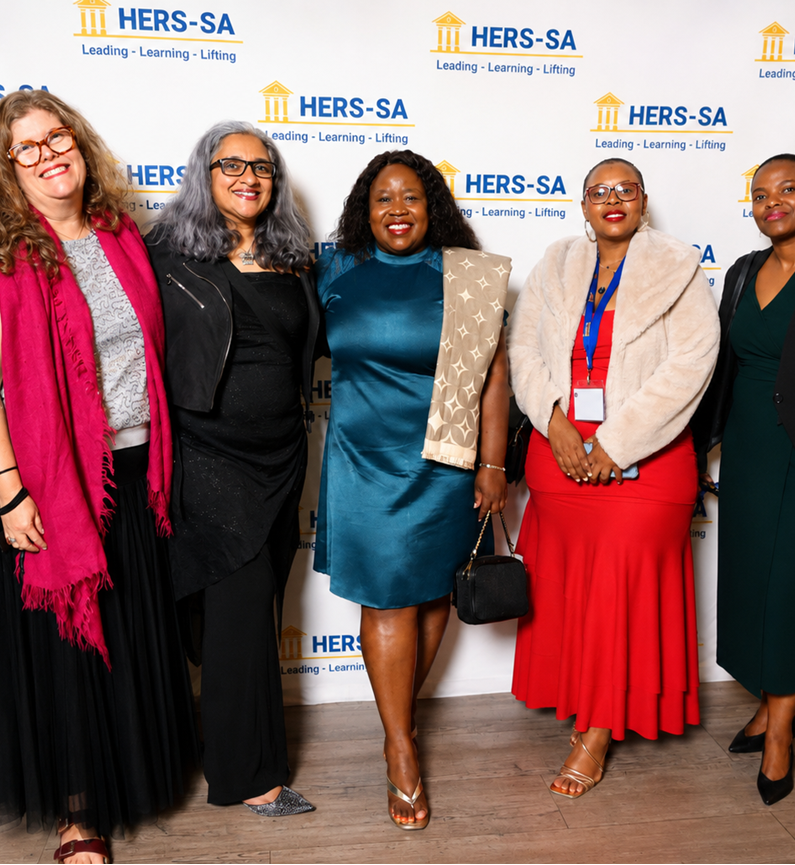
Five women from the University of KwaZulu-Natal (UKZN), representing the Institution’s four Colleges and Professional Services, recently completed the 2026 HERS-SA (Higher Education Resource Services – South Africa) Women in Leadership Academy in Cape Town.
They joined 76 women leaders from universities across South Africa in an intensive week of leadership development, reflection, networking and personal growth.
The Academy was held from 23 to 27 August under the theme: ‘Women Governing Change: Transformative Leadership, Institutional Accountability and Sustainable Futures’.
The UKZN delegation comprised Dr Suhayfa Bhamjee, Discipline Head of Public Law in the School of Law; Dr Nontuthuko Maningi, Senior Lecturer and National Research Foundation (NRF)-rated researcher in Medical Microbiology and Molecular Mycobacteriology; Ms Suke Phewa, Acting School Operations Manager in the School of Medicine; Dr Miranda Young-Jahangeer, Discipline Head of Music and Drama and Performance Studies in the School of Arts; and Ms Nontobeko Magwaza, Procurement Manager: Colleges and Research.
Founded in 2003, Higher Education Resource Services South Africa (HERS-SA) is a non-profit organisation dedicated to developing and advancing women leaders in Higher Education. Established in response to the underrepresentation of women in senior leadership positions, HERS-SA has spent more than two decades building a pipeline of women leaders through leadership academies, mentorship programmes, professional development initiatives and sector-wide networking opportunities.
The Women in Leadership Academy, launched in 2005 as HERS-SA’s flagship programme, has become one of the most respected leadership development initiatives in South African Higher Education. It combines practical leadership training with mentorship, strategic thinking, personal reflection and the development of professional networks designed to endure long after the programme concludes.
Over four days, participants engaged with senior university executives, governance experts, academics and leadership practitioners on topics including women and institutional power, transformation, governance and ethics, financial sustainability, fundraising, leadership resilience, stakeholder engagement, political intelligence and designing a leadership legacy. Delegates were challenged to critically examine their own leadership journeys while developing practical tools to navigate increasingly complex institutional environments.
For Dr Nontuthuko Maningi, whose research focuses on improving diagnostics and detecting resistance markers for multidrug-resistant tuberculosis, the Academy highlighted the relationship between knowledge, innovation and leadership.
“As a researcher, I was particularly inspired by the Academy’s emphasis on evidence-informed leadership and purposeful decision-making. The discussions challenged us to think about how research, innovation and leadership intersect to address complex societal and institutional challenges. I left with a renewed appreciation of the role women can play in generating knowledge, leading change and creating sustainable futures.”
A distinguishing feature of the Academy was its emphasis on introspection and intentional leadership development. Through reflective exercises and facilitated discussions, participants were encouraged to evaluate their leadership values, aspirations and impact. One of the most memorable activities involved writing a personal ‘Future Me’ letter, prompting delegates to reflect on the legacy they hope to build over the next five years.
Reflecting on this aspect of the programme, Ms Suke Phewa said: “One of the most powerful lessons from the week was the importance of intentional leadership. The reflective exercises encouraged us to pause, assess where we are in our leadership journeys and envision the kind of leaders we aspire to become. As someone working in a financial and operational environment, I was also reminded that responsible leadership requires both vision and accountability, ensuring that resources are managed in ways that support institutional goals while remaining people-centred.”
The Academy also fostered meaningful engagement among women from diverse institutions, disciplines and professional backgrounds, creating opportunities for collaboration and mutual learning.
According to Dr Miranda Young-Jahangeer, whose academic work uses applied theatre and participatory performance as tools for dialogue and social transformation, the creative dimensions of leadership resonated strongly.
“Being part of a cohort of accomplished women from across the Higher Education sector created a unique learning environment. Coming from the arts, I was reminded that leadership is also about imagination, storytelling and helping others see new possibilities. The Academy encouraged us to think creatively about transformation and demonstrated how diverse perspectives can strengthen institutions and inspire meaningful change.”
A recurring theme throughout the Academy was the importance of ethical leadership in times of uncertainty and institutional change.
For Ms Nontobeko Magwaza, the programme reinforced the centrality of human dignity, accountability and ethical decision-making.
“One of the ideas that resonated most strongly with me was the importance of leading with dignity. In Higher Education, and indeed in leadership more generally, difficult and sometimes uncomfortable decisions have to be made. The challenge is not whether those decisions are made, but how they are made. The Academy reinforced that leadership should be dignity-affirming rather than dignity-effacing, ensuring that even in moments of disagreement, change or institutional pressure, people remain seen, heard and respected. Working in procurement, where decisions often require balancing competing priorities, this was a particularly meaningful lesson.”
The programme further challenged participants to consider how women leaders can influence systems, champion transformation and reshape institutional cultures.
Reflecting on these discussions, Dr Suhayfa Bhamjee said: “The Academy reinforced my belief that women leaders must be prepared to be disruptors. Transformation does not happen because we are comfortable; it happens because people are willing to ask difficult questions, challenge entrenched ways of doing things and imagine better possibilities. Being a disruptor is not about creating conflict. It is about having the courage to lead change, even when change is uncomfortable. The Academy challenged us to think beyond maintaining systems and to consider how we can actively shape more responsive, accountable and humane institutions.”
A significant outcome of completing the Academy is admission to the HERS-SA Alumni Network, a national community of women leaders committed to supporting one another through mentorship, collaboration, knowledge-sharing and leadership development. Established in 2012, the network enables graduates of HERS-SA programmes to remain connected and continue contributing to the advancement of women in Higher Education.
The broader HERS movement has had a remarkable global impact. According to HERS-SA, more than 4 300 women faculty members and administrators have participated in HERS programmes worldwide, with alumnae active across more than 1 200 campuses in South Africa, the United States and several other countries. More than 500 alumnae currently serve in senior leadership positions in Higher Education Institutions.
Alumnae have gone on to serve as Vice-Chancellors, Deputy Vice-Chancellors, Registrars, Deans, Executive Directors, Heads of School, researchers and senior professional leaders. Many continue to mentor emerging leaders, influence institutional policy, advance gender equity and contribute to transforming Higher Education across the globe.
The five UKZN delegates now join the ranks of these accomplished HERS alumnae. Their participation not only reflects UKZN’s commitment to developing women leaders across both academic and professional sectors but also connects the University to a powerful network of women who are shaping the future of Higher Education.
Reflecting on the calibre of women who participated in the Academy, Bhamjee remarked: “The programme was full, impactful and thoughtfully curated. A remarkable amount was packed into just a few days. Looking around the room at the calibre of women participating, I could not help but think that if this is what leadership in academia is going to look like for generations to come, then the future is bright. It is going to be different, and it is going to be phenomenal.”
The delegates encouraged colleagues across the University to embrace opportunities for leadership development, lifelong learning and reflective practice. They noted that programmes such as the HERS-SA Women in Leadership Academy offer more than professional training; they provide access to a lifelong community of women committed to learning, lifting and leading together.
As UKZN continues to strengthen leadership excellence across its academic and professional sectors, the experiences of these delegates demonstrate the transformative value of investing in women who are prepared not only to lead institutions, but also to help reimagine and shape the future of higher education.

Previous post
Law Beyond the Classroom Connects UKZN Law Students with Legal Profession
You may also like


Shaping the Future of Cities: UKZN Scholar Takes Global Role at ISOCARP
