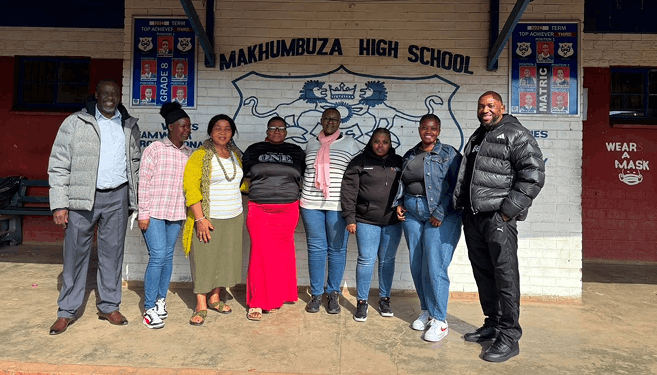
The University of KwaZulu-Natal (UKZN) successfully hosted its Winter School Outreach Programme at Makhumbuza High School in the Umlazi District from 29 June to 4 July as part of the research project ‘Reimagining the Teaching of isiZulu: A Comprehensive Pedagogical Approach to the Teaching of Linguistic Aspects of Language and Grammar in Basic Education’.
The project was led by Dr S Z Ntshangase and Dr N P Pewa as Principal Investigators, with Dr N Ngcobo and Mr T M Zungu serving as Associate Researchers. The research team also included Field Researchers Ms T Ndlovu, Ms C D Ndlovu, Ms N Diya, Ms H Mdewuka and Ms N Jama.
The initiative addresses persistent challenges in the teaching of Grade 8 isiZulu Home Language, where language instruction is often constrained by curriculum approaches benchmarked against English and insufficient attention to the unique linguistic structures of isiZulu. “These challenges contribute to learners’ weak foundations in grammar, morphology, syntax and semantics, affecting their long-term academic success,” said Ntshangase.
Guided by Participatory Action Research and informed by Systemic Functional Linguistics, the project aimed to develop and evaluate innovative, contextually relevant pedagogies for teaching isiZulu language structures. During the Winter School, the UKZN research team worked with 40 Grade 8 learners, implementing and evaluating a pedagogical framework designed to strengthen learners’ linguistic competence through contextualised grammar instruction and meaningful language use.
The programme combined a critical analysis of the Curriculum and Assessment Policy Statement (CAPS) for isiZulu with evidence-based classroom interventions. Ntshangase explained that learners participated in engaging lessons incorporating translanguaging, dialogic teaching, collaborative learning, multimodal instruction, formative assessment and culturally responsive pedagogies. “These approaches significantly enhanced learner participation, confidence and conceptual understanding of isiZulu language aspects.”
Ntshangase said that classroom observations, learner assessments and reflective research discussions formed part of the project’s systematic data collection process. He added: “The findings will inform qualitative and quantitative analyses, contributing to recommendations for curriculum improvement and the development of a practical toolkit comprising sample lesson plans, innovative pedagogical strategies, assessment tools and guidelines for integrating linguistic theory into classroom practice.”
According to Ntshangase, the project reflects UKZN’s commitment to advancing indigenous language education through research, innovation and community engagement.
“By demonstrating the value of research-led, contextually responsive pedagogies, the Winter School Outreach Programme contributes to strengthening isiZulu Home Language teaching and improving learners’ linguistic competence in Basic Education,” he added.
Words: NdabaOnline
Photograph: Supplied