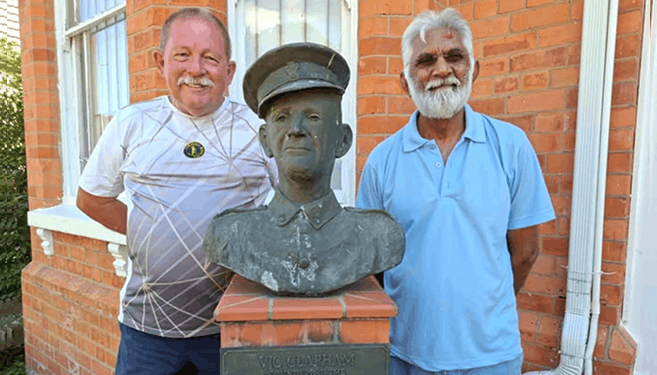
Retired University of KwaZulu-Natal (UKZN) staff member Mr Ravin Sivraman has made a significant contribution to South African sport and community service through his long-standing involvement with the Comrades Marathon, where he has served as Route Portfolio Convenor for more than a decade.
Having dedicated 47 years of technical service to UKZN’s College of Agriculture, Engineering and Science on the Pietermaritzburg campus before retiring in 2023, Sivraman has remained closely connected to the University while simultaneously playing a pivotal role in organising one of the world’s most iconic ultramarathons.
His commitment to the Comrades Marathon began in 2002 when he volunteered at the race start and finish. A decade later, he was appointed Route Portfolio Convenor on the Comrades Marathon Association’s Race Organising Committee (ROC), a position that placed him at the heart of planning and managing the historic route between Pietermaritzburg and Durban.
Working alongside fellow Route Portfolio Convenor Mr Braam Zaayman, Sivraman continues to oversee a range of responsibilities essential to the successful staging of the race. These include conducting route inspections, reporting road defects to authorities, co-ordinating route measurements, supervising route markings, liaising with contractors and municipal officials, and managing numerous logistical arrangements along the course.
“It starts very early in the year when we do drive-throughs to check the condition of the roads and make notes about damage or potholes, so that we can send our reports to the different municipal or provincial authorities to have repairs done,” said Sivraman.
His work extends far beyond race day. Together with a team of between 70 and 80 dedicated volunteers, Sivraman ensures that every aspect of the route meets the exacting standards required for the world-renowned event.
Sivraman explained that annual route measurements have become increasingly important due to ongoing roadworks and infrastructure developments. “We go out with the course measurer and work with traffic and Metro services to ensure the route is measured correctly. With all the recent roadworks, we have to remeasure every year because the route changes all the time.”
On race day itself, Sivraman’s responsibilities begin shortly after midnight. He and his team travel the route to verify that all preparations are in place before moving between official cut-off points throughout the day.
He said that some aspects of the role were emotionally challenging. “We have to race as fast as we can safely get through all the runners to get to the next point to do the cut-off, even though it’s a horrible part of the job.”
Beyond the operational demands, Sivraman views preserving the heritage of the Comrades Marathon as one of the most important aspects of his work.
“Even though the route has changed a lot over the last century, we have to make sure that the history is kept alive, including running through certain sections and past certain landmarks,” he said.
Among his most treasured memories are the traditions and human connections that define the race. He described placing a bouquet of flowers at Arthur’s Seat before race day as one of the event’s most meaningful moments.
“To me, the whole race day is a highlight,” said Sivraman. “One of the biggest highlights is seeing the kids at the Ethembeni Special School alongside the road, holding their hands out for high-fives from the runners.”
For Sivraman, the greatest reward is not the prestige of the event, but the relationships forged through years of volunteer service.
“It’s the friendship,” he reflected. “You develop a family bond with your fellow ROC members, and they become part of your family. They are such wonderful, amazing human beings.”
Sivraman’s association with the University reflects the same level of dedication. He joined the then University of Natal as a Laboratory Assistant in the Botany Department in 1976 before accepting an Assistant Technician post in the Physics Department.
Promoted to Technician, he spent many years organising the laboratories and equipment, combining significant technical expertise with a calm and approachable demeanour.
Retiring after 47 years, he continues to assist the Pietermaritzburg Physics Department on a contract basis.
Words: Sally Frost
Photograph: Courtesy Comrades Marathon Association