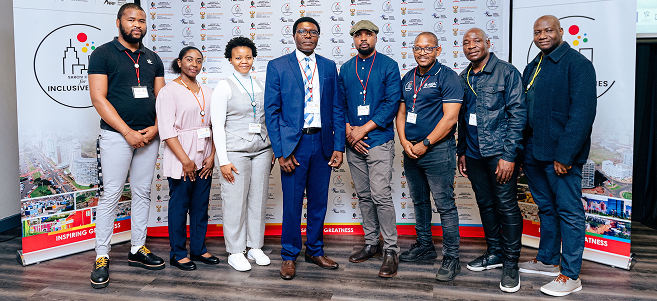
The 3rd International Conference centred around the theme ‘Resilient Cities and Communities: Adapting to Climate Change and Beyond’ was recently held at the University of KwaZulu-Natal.
It was led by the South African Research Chairs Initiative (SARChI) in Inclusive Cities.
The conference aimed to foster collaboration among stakeholders, including government agencies, academic institutions, civil society organisations, and the private sector – to advance the agenda of urban resilience in the face of climate change.
Discussions highlighted the need for equitable strategies in resilience-building, emphasising the importance of prioritising vulnerable populations in climate adaptation efforts.
According to Professor Lovemore Chipungu from the School of Social Sciences, there has historically been a range of city types, and there is now a recognised need to engage with government bodies to explore the potential for achieving more inclusive urban models. He said, “Through collaboration and interrogation of existing capacities, we aim to build cities without barriers to opportunities for all.”
Chipungu identified the crucial intersection of urban development and climate change, noting that climate change is a central factor influencing cities. He posed the question: “Can we design cities that are truly responsive to the challenges posed by climate change, or is this merely an illusion?” He added, “It’s essential to consider the population within these urban areas, as well as the presence of greenhouse gases, which significantly affect the sustainability of our cities.”
He stated, “Cities play a significant role in both contributing to environmental challenges and offering potential solutions. As urban areas continue to face issues such as rising sea levels, heat waves, and natural disasters, the need for effective responses becomes increasingly urgent.”
Community engagement was underscored as a crucial component in the planning and implementation of resilience initiatives. Furthermore, technological innovations and data-driven solutions were presented as essential tools for enhancing urban resilience and disaster preparedness.
Several pertinent case studies were shared, including strategies for strengthening climate resilience in informal settlements, such as the Foreman Road Informal Settlement and the community climate resilience efforts in Tongaat, KwaZulu-Natal. Other studies examined disaster prevention strategies in South Africa’s peri-urban areas and the complexities of resilience planning in areas where forests intersect with informal settlements, particularly in Eshowe.
The conference also addressed the role of the Building Resilience Index (BRI) in shaping future cities. Other topics included South Africa’s readiness for transitioning to electric vehicles in Johannesburg, and the potential of decentralised technologies – such as those presented in the study ‘Blockchain Empowered Urban Infrastructure Management’ – to optimise resource allocation and reduce operational costs.
In-depth conversations focused on collaboration and partnership, especially in relation to climate resilience strategies. Topics included the Sponge City approach for post-flood recovery in the Mega Village Informal Settlement and the reform of minibus taxis to develop a more climate-resilient urban transport system in South Africa.
Chipungu said, “Creating liveable cities that are inclusive and accessible to everyone is indeed possible, but it requires addressing the complex social dynamics at play. Our commitment to this vision is reflected in our dedication to a multidisciplinary approach in urban development.”
Words: Sinoyolo Mahlasela
Photograph: Supplied