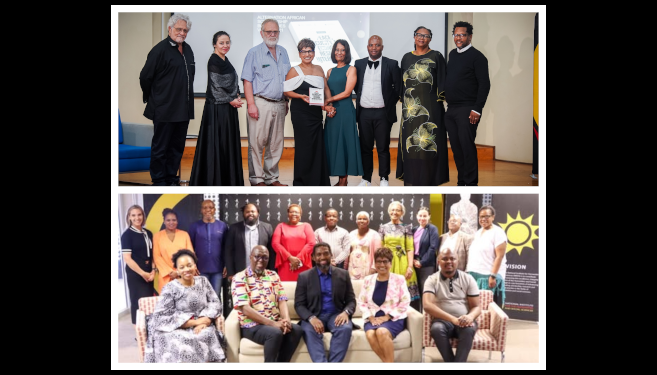
The University of KwaZulu-Natal (UKZN) has reinforced its commitment to African-centred research with the launch of a new publication under the Alternation African Scholarship Book Series, hosted by Professor Nirmala Gopal, newly appointed board member of the National Institute for the Humanities and Social Sciences (NIHSS).
The book brings together interdisciplinary research tackling some of Africa’s most urgent challenges — including peace, security, public health and economic development. Developed through collaboration between UKZN scholars and KwaZulu-Natal government departments, the publication offers evidence-based insights designed to inform both policy and practice.
“This publication bridges academia and real-world application,” said Gopal. “It provides practical tools and critical perspectives needed to address complex challenges facing the continent.”
The launch featured presentations from contributing authors who reflected on the book’s relevance in a rapidly shifting global context. Speakers emphasised the importance of grounding solutions in African realities and lived experience, particularly as global power dynamics evolve and the BRICS bloc expands.
Professor Gert Kruger, Senior Researcher in Pharmaceutical Chemistry, presented a chapter analysing lessons from the COVID-19 pandemic. He argued that inadequate application of evidence-based medicine and holistic crisis management principles contributed to avoidable harm.
“We now recognise that many aspects of the pandemic response were deeply flawed,” said Kruger. “A stronger commitment to evidence-based approaches and integrated management could have prevented serious consequences.”
Kruger cautioned against rushed medical interventions and the widespread use of ineffective treatments, underscoring the need for stronger scientific rigour in future health emergencies.
Associate Professor Matshepo Matoane from the Discipline of Psychology addressed the concept of psychological security as a core human need. Her chapter expands the understanding of security beyond physical protection to include belonging, social stability and freedom from fear.
“Psychological security is co-created within communities,” Matoane explained. “Without it, individuals and communities cannot thrive.”
She highlighted the importance of collective engagement in building environments where people feel safe, valued and empowered.
Gopal described the publication as a timely and strategic contribution to African scholarship, particularly in light of emerging geopolitical shifts. “An African-centred lens is essential in shaping research, policy and development strategies for the future,” she said.
The book launch signals more than an academic milestone — it reflects a broader commitment to positioning African scholarship as a driver of policy innovation, institutional reform and sustainable development.
Gopal’s recent appointment as a board member of the NIHSS positions her at the forefront of advancing excellence, transformation and social impact in the humanities and social sciences. At a recent NIHSS meeting attended by the Honourable Minister of Higher Education and Training, Mr Buti Manamela, and Board members, discussions focused on strengthening governance, expanding research impact and aligning initiatives with South Africa’s National Development Plan 2030 and the United Nations Sustainable Development Goals.
Words: Sinoyolo Mahlasela
Photographs: Courtesy of the National Institute for the Humanities and Social Sciences and Supplied