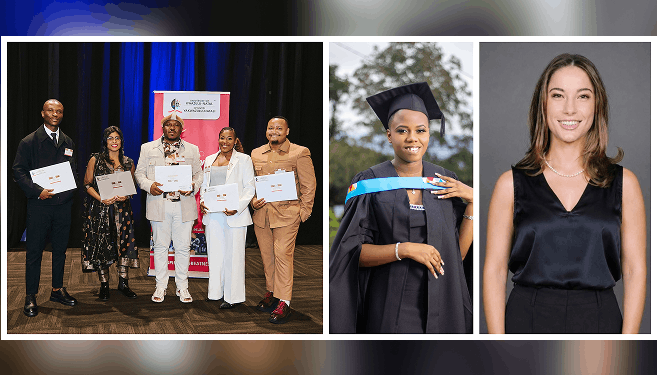
Eight postgraduate students at the University of KwaZulu-Natal (UKZN) have been awarded the Rick Turner Scholarship in recognition of their student leadership credentials, community involvement and commitment to academic excellence.
The recipients are Mr Emmanuel Barnes, Ms Hlengiwe Maphumulo, Mr Kwanele Duma, Mr Musawenkosi Dlamini, Ms Senamile Mabaso, Ms Sonali Pillay, Ms Stacey Farinha and Ms Janet Gule.
The scholarship aims to support master’s-level research that addresses issues of justice and freedom for all South Africans. It is named in memory of Richard Turner, an anti-apartheid activist who was assassinated during the apartheid era.
Barnes described the scholarship as transformative and rewarding. Beyond his academic work, he has actively participated in leadership and community engagement initiatives. “I served as a Class Representative for three consecutive years in the Discipline of Social Work, a Peer Educator at the UKZN Campus HIV/AIDS Support Unit, a Resident Assistant at the UKZN Department of Student Resident Affairs, a First-Year Experience Mentor, and a Student Ambassador at Career Development exhibitions,” he said.
For Maphumulo, receiving the scholarship reinforced the importance of discipline, perseverance and a genuine passion for one’s field of study.
“I often say that this discipline chose me, rather than the other way around. My commitment to learning and desire to make a meaningful impact in education have been constant motivators. Furthermore, the confidence and encouragement from my lecturers and colleagues have consistently reinforced my belief in my potential as a future educational leader.”
Duma also attributed his success to discipline, hope and perseverance. He said: “I remained committed to my goals and continued to work hard despite obstacles. In addition, having a strong support system, particularly from my family, especially my mother, provided me with encouragement, motivation, and strength to keep going even on the toughest days.”
Dlamini found balancing postgraduate research, leadership responsibilities and community engagement while maintaining academic excellence challenging. Receiving the scholarship, however, strengthened his commitment to his academic and research goals.
“Receiving the Scholarship encourages me to continue pursuing excellence and reminds me that hard work does not go unnoticed. It also strengthens my responsibility to use the opportunities I have been given to produce research that contributes to improving education in South Africa, while inspiring other young people from similar backgrounds to believe that they too can achieve their academic dreams,” he said.
Pillay’s decision to pursue Clinical Psychology was inspired by her recognition that mental health remains widely misunderstood, particularly in the South African context. She believes some of these misunderstandings may be linked to the discipline’s reliance on Western models.
“I was, therefore, inspired to pursue this degree to contribute to transforming the discipline to suit the needs of the Global South, especially South Africa, and advancing African psychology on the global stage,” she said.
Mabaso became increasingly interested in the intersection between crime, trauma, victimisation and mental health within the South African context.
“I realised that research has the power not only to deepen our understanding of these issues, but also to inform policies and interventions that improve people’s lives.”
Farinha’s journey was inspired by her undergraduate studies in South African Sign Language and her passion for making mental health services more accessible and inclusive, particularly for the Deaf community. Volunteering at a school for the Deaf and participating in multidisciplinary team meetings further highlighted the urgent need for psychologists who are trained to support the unique emotional and mental health challenges faced by this community.
“That practical exposure deeply affirmed my career choice.”
Words: Sinoyolo Mahlasela
Photograph: Sethu Dlamini and supplied