Public Governance Academic Addresses Conference in Kenya
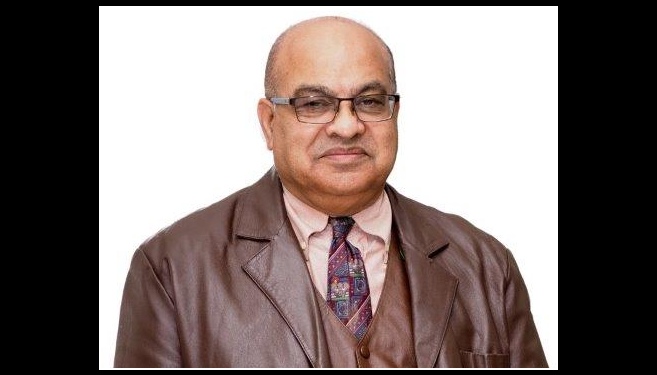
Emeritus Professor Purshottama Reddy of UKZN’s School of Management, IT and Governance co- presented a paper at the 2024 annual International Institutes of Administrative Sciences (IIAS) annual Conference in Mombasa, Kenya.
Themed International Collaborative Governance, the conference took place against the backdrop of the devastating effects of the COVID-19 pandemic, the wars in Ukraine and Palestine and the broader global context of volatility, uncertainty, complexity and ambiguity (VUCA).
Apart from attending the statutory meetings of IIAS, Reddy – who is the Vice – Chairperson of the Programme and Research Committee (PRAC) of IIAS – chaired a session on Intergovernmental Co-ordination; and served on a Panel critiquing alternative service delivery in local government.
His paper, co-presented with master’s graduate Dr Z L Mkhize, was titled: Service Delivery at the Provincial Sphere of Government : A Case Study of Operation Sukuma Sakhe (OSS) in KwaZulu- Natal, South Africa.
South Africa has been plagued by challenges of ineffective service delivery linked to poor coordination, competition and contestation of powers due to overlapping constitutional mandates, lack of cooperation and poor alignment, despite the provision for improved intergovernmental relations and cooperative government in Chapter 3 of the Constitution. This has resulted in rising public discontent, declining public confidence and public protests against poor service delivery.
The OSS model was introduced by the Provincial Government in KwaZulu-Natal in 2009 to improve service delivery, and eradicate structural poverty, inequality and its manifestations. The paper argued that OSS enabled effective service delivery through simultaneous implementation of five convergent principles : (1) co-operative government; (2) intergovernmental relations; (3) good governance; (4) community participation; and (5) integration of services.
The convergence of these principles within OSS meant that it operated as a coordinating institutional mechanism which is critical in multi-level governance and further creates the necessary ‘spirit of cooperation’ akin to the German concept of Bundestrue. The study concludes that lessons learned from the OSS in KwaZulu-Natal should be applied nationally for the district based planning and budgeting model to successfully emerge.
Reddy’s contribution to the panel discussion was titled, The Shared Services Approach (SSA) in South African Local Government. He said the SSA had the potential to be a popular and effective mechanism to enhance performance and service delivery, and reduce costs in South Africa local government through the centralising of administrative functions. The theoretical arguments for introducing the SSA were compelling and defensible, however there were several challenges and
problems which needed to be addressed.
He said lessons could be learned from the international experience and applied in the South African context. ‘The legislative and policy framework for the SSA has been in place for more than 20 years in South Africa; however, it has not been a success. The process needs strong political and management will and firm and decisive action. The country can benefit from the SSA – there is some sceptism, limited trust and impediments. The SSA requires greater awareness, capacity building and change management which are crucial,’ he said.
Reddy’s paper was generated out of a wider research project that he and his colleagues were involved in for the Local Government Sector Education and Training Authority (LGSETA) in South Africa.
Words: Supplied