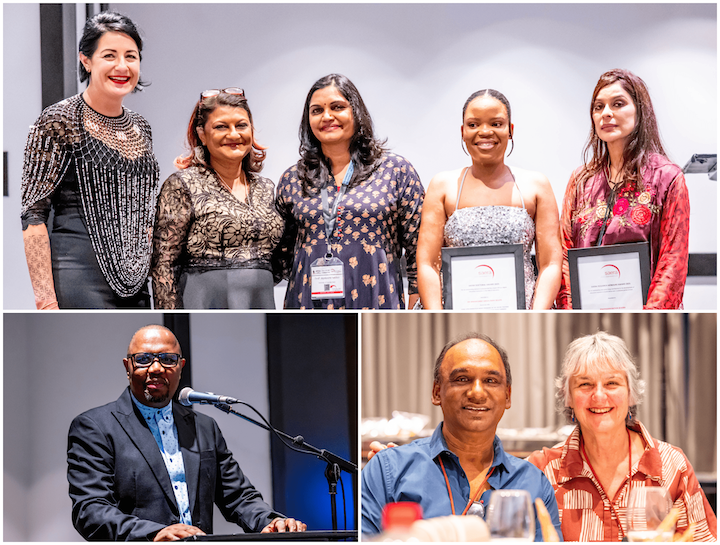
Education in a Time of Polycrisis: Pathways of Hope, Creativity and Affirmative Ethics was the theme of the12th annual South African Educational Research Association (SAERA) conference hosted by the University of KwaZulu-Natal’s (UKZN) School of Education recently.
Polycrisis refers to the interconnected nature of multiple simultaneous global challenges, such as environmental degradation, economic instability, political conflict and health emergencies, which together intensify their impact.
The conference offered those present ‒ education researchers, policymakers, teachers, students, academics and funders – the opportunity to reflect on what education means today, and to explore how it can respond to overlapping crises which exist. Central questions included: What role should ethics play in education during turbulent times? What knowledge, skills and mind-sets do young people need in a polycrisis world?
The four-day conference programme featured keynote speakers, panel presentations, and individual paper sessions punctuated by a book launch and gala dinner.
Conference highlights included a keynote address by international educator, researcher, and evaluator Professor Joel Samoff whose address, titled: “When Research Rigour becomes a Research Cage: Transforming Sites of Control into Locales of Opportunity”, investigated the politics of research on the African continent and the driving forces influencing its direction.
The conference offered participants opportunities to attend varied panel discussions and presentations involving diverse themes such as gender, climate change, school leadership, digital technology and teacher education.
Day two included the Nelson Mandela legacy lecture presented by Professor Heila Lotz-Sitsika on the Ethical Worth of an Education: Moving Beyond Encapsulations.
Lotz-Sisitka is a Professor of Education and the Director of the Environmental Learning Research Centre at Rhodes University.
The presentation by the national keynote panel focused on: “Critical Perspectives on Polycrisis”, which featured education academics from various South African higher education institutions including UKZN’s Dean and Head of the School of Education Professor Emmanuel Mgqwashu; theNational Research Foundtion ( NRF) , Department of Higher Education (DHET) and SARChI Chair: Teaching and Learning (Tier 1) at University of Johannesburg; Professor Shireen Motala; Emeritus Professor in Civil Engineering at the University of the Witwatersrand, Professor Yunus Ballim, and Professor in Curriculum Studies at Stellenbosch University, Professor Petro du Preez.
In a world facing interlinked crises, SAERA 2025 provided a timely space for research-based reflection on education’s role. The focus on affirmative ethics and creativity signals a hopeful orientation and rather than simply diagnosing problems, the conference encouraged participants to explore innovative, caring, and future-oriented responses. By centring ethics, the event demanded that research and practice don’t just adapt to crisis ‒ they proactively shape more just, resilient, and humane educational futures.
Words: Jennene Naidu
Photo: Supplied