International Research Informs Policy on South Africa’s Agrifood System
International, collaborative research with an agricultural focus centred at UKZN is influencing policy to ensure a more diverse agrifood system in South Africa by mainstreaming neglected and underutilised crop species.
This research emerges from years of work by researchers in the Sustainable and Healthy Food Systems (SHEFS) programme, an inter-institutional project funded by the Wellcome Trust’s Our Planet, Our Health Programme in South Africa, India and the United Kingdom.
SHEFS researchers focus on the intersection of the environment, food systems and health, investigating food systems under significant pressure from various stressors, including demographic changes, shifts in dietary patterns, land use changes and urbanisation resulting in undernourishment and a rise in non-communicable diseases, leading to substantial economic losses and environmental degradation.
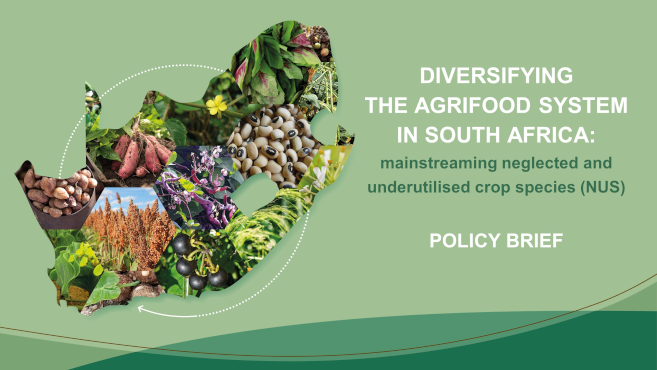
A policy brief developed by a consortium of researchers in the United Kingdom, South Africa, and Botswana laid out the challenge posed by increasing demand for food, including inequities in household food and nutrition security that is exerting pressure on food systems, which are already threatened by climate change, environmental degradation, and declining agrobiodiversity.
‘The narrow range of crops supplying global food requirements makes food systems and people more vulnerable to climate risks,’ said Tafadzwa Mabhaudhi, Professor of Climate Change, Food Systems and Health at the London School of Hygiene and Tropical Medicine (LSHTM) and Honorary Professor at UKZN who leads the agriculture theme of SHEFS.
‘Diversifying the food system with underutilised crops can increase agricultural income, promote agrobiodiversity (crop diversity), and supply diverse and nutritious food to tackle malnutrition, hidden hunger, and food insecurity under climate change, contributing to human and environmental well-being,’ he added.
The brief advocates for underutilised crops to be mainstreamed in food systems to promote food and livelihood security and empower vulnerable communities economically and sustainably, transforming the food system into a more inclusive, healthy, resilient, and socially just one. This will also improve the socio-economic standing of women, the youth and the marginalised within their homes and communities, particularly in rural areas.
In pursuit of enhancing the role of underutilised crops in food systems, the authors say it is vital to develop a framework for action and partnerships focusing on policy harmonisation, crop improvement, inclusive value chains, access to finance, and capacity strengthening and awareness building for underutilised crops. The researchers highlighted the need for agrifood diversification and the challenges in adopting and mainstreaming underutilised crops, including seed systems, seed production, utilisation, and marketing.
The potential of these crops under climate change is significant as many are nutrient-dense and highly adaptable to harsh environments, improving food systems’ resilience to climate shocks while promoting healthier, more equitable, and inclusive diets.
The action taken over the coming years will be critical. A new initiative focusing on transdisciplinary research for impact is needed – one that integrates and applies the best and most promising underutilised crops, approaches, tools, and technologies.
This policy brief was co-developed with support from the Centre on Climate Change and Planetary Health and the LSHTM, the Centre for Transformative Agricultural and Food Systems at UKZN, South Africa’s Department of Agriculture, Land Reform and Rural Development, the Water Research Commission, the Centre for Coordination of Agricultural Research and Development for Southern Africa and the Food, Agriculture and Natural Resources Policy Analysis Network.
Words: Christine Cuénod
Image: Supplied