Africa’s First Evidence-Based Hair Training Masterclass and Workshop
UKZN hosted Africa’s first evidence-based hair training masterclass and hands-on workshop in Durban under the auspices of Professor Ncoza Dlova, the University’s Head of Dermatology and immediate past Dean of the School of Clinical Medicine.
Dlova is a recipient of the 2024 Gold Medal Scientific Merit Award from the South African Medical Research Council (SAMRC).
The three-day hybrid event attracted around 100 in-person and 15 online delegates from 15 African countries, Australia, the US and Europe – all diverse hair experts. They shared their expertise and clinical wisdom, participating in a hands-on workshop involving patients on procedures for the management of hair loss and trichoscopy (examination of the scalp and hair using a handheld or a videodermoscopy device).
Many African, African American, Asian, and even Caucasian females (as well as men of different races) experience various forms of alopecia (hair loss), which is currently among the top five skin conditions seen by dermatologists. Traction alopecia (TA) is one of the most common causes of hair loss amongst African women. This preventable condition mainly affects the front and sides of the scalp as a result of prolonged or repetitive tension and pulling of the hair.
Dermatology experts worldwide concur that alopecia due to traction (pulling of the hair) commonly occurs when individuals wear tight hairstyles, weaves and dreadlocks, especially over long periods, or when chemically relaxed hair is also subjected to mechanical pulling and traction. Tight or traction-inducing hairstyles include tight cornrows, dreadlocks, weaves, braids and hair extensions. The weight of excessively long hair extensions and constantly tight ponytails can also cause traction alopecia.
While TA is commonly associated with African American females and women of African descent in general, experts say the condition affects people of any ethnic background or age. It was noted that: ‘The likelihood of developing traction alopecia increases with age, likely due to a prolonged history of these hair practices. Patients may present with symptoms such as itching, headache, tenting, redness, scaling, multiple short broken hairs, thinning, folliculitis or pustules.’
KwaZulu-Natal-based dermatology registrar (specialist in training), Dr Sabelo Sibanyoni said, ‘As much as braids and relaxed hair look good on our sisters and loved ones, the long-term effects can be dire.’ His sentiments were echoed by Ngwelezana Tertiary Hospital Specialist Dermatologist, Dr Sthembiso Mhlanga who was actively involved in planning the event.
‘We need to preach the gospel of embracing our natural beauty and gorgeous curly hair,’ said Dr Meera Singh, one of the international panellists who presented pertinent hair loss case management examples from the US. She added that she admires Dlova’s passion for preserving people’s natural skin and hair and that she lobbies for accelerated dermatology education, especially amongst women of colour.
Group leader of the UK Central Centrifugal Cicatricial Alopecia (CCCA) support group run by the Scarring Alopecia Foundation (SAF) who is based in the US, Ms Lorna Jones, said there is a hair loss epidemic predominantly in Black women and nobody in the UK is talking about it. ‘It is the most common cause of permanent hair loss in women, and we need to raise critical awareness.’
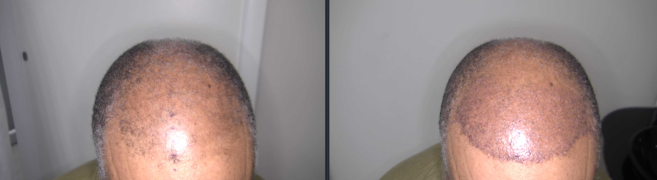
The delegates thoroughly enjoyed the hands-on practical examination of patients and observation of various therapeutic treatment modalities for patients with alopecia. This included observing various procedures like injection of platelet rich plasma (PRP), needling, trichoscopy and hair transplant on patients with traction alopecia (injibhabha) and male pattern hair loss (baldness /impandla). They thanked UKZN for hosting such a “high-calibre” clinical masterclass and hands-on workshop.
Dlova said it is envisaged that the Dermatology Discipline will host such hybrid events every second year.
Words: Lunga Memela
Photographs: Supplied