
2026 Budget Speech: Relief for Small Businesses and Individual Taxpayers
- Posted by ukzn-admin
- Categories News
- Date March 2, 2026
The 25 February 2026 Budget Speech delivered by the Minister of Finance, Enoch Godongwana, brought much-needed relief, particularly for individuals and small businesses. As I began my day presenting the Advanced Taxation lecture to the Postgraduate Diploma in Accounting (PGDA) students at the University of KwaZulu-Natal (UKZN) in Westville, I eagerly anticipated the Minister’s budget speech address. There was a clear sense of expectation, knowing that the fiscal direction outlined that afternoon could carry meaningful implications for many of the topics we engage with daily in the Advanced Taxation lecture.
As my lecture concluded, I made my way to my office with great enthusiasm to listen to the Budget Speech. When 2pm finally arrived, the moment felt both significant and reassuring. The Minister’s address proved, in my view, to be a big win for individuals and, notably, for small businesses.
While the Budget included various fiscal measures and relief initiatives, those most aligned with my academic focus stood out prominently. Having covered Capital Gains Tax earlier that day, I was particularly excited to hear about the relief granted to small business owners when they sell their businesses. It is professionally rewarding to witness legislative developments that directly reinforce and update the content we lecture.
In this article, I reflect on how, within the broader framework of the 2026 Budget, individuals and small businesses have emerged as meaningful beneficiaries. After carefully considering the Minister’s address, I commend the National Treasury for recognising the important role of small enterprises in our economy, particularly through relief measures that had remained unchanged for several years.
The 2026 Budget signals not only fiscal adjustment, but also renewed encouragement and support for entrepreneurship and economic participation. The notable amendments affecting individual taxpayers and small businesses are outlined below:
Individuals’ specific adjustments:
• Adjusting personal income tax brackets and rebates – Considering that last year the personal income tax brackets and rebates remained unchanged, this adjustment brings much-needed relief to individuals who had been feeling the pinch of bracket creep from the 2024/25 to the 2025/26 year of assessment. The inflationary pressure without adjustment had placed an additional burden on taxpayers, and this revision is therefore both timely and welcomed.
• Adjustment in section 12T(4)(a) of Income Tax Act 58 of 1962 – Tax-Free Investment annual limit from R36 000 to R40 000: This increase comes at an important time for taxpayers who wish to take advantage of the Tax-Free Investment opportunity. It is a positive signal from Government to encourage savings. I agree with the Minister that national savings and investment levels remain below what is required to build generational wealth and support local economic growth. While the increase in the annual limit is welcomed, the lifetime cap in section 12T(4)(c) remains at R500 000. Ideally, an adjustment to the lifetime limit would also have ensured a more balanced increase. Increasing the annual limit from R36 000 to R40 000 effectively reduces the number of years a taxpayer can contribute until reaching the R500 000 lifetime cap – from approximately 13.9 years to 12.5 years.
• Adjustment in section 11F(2)(a) of Income Tax Act 58 of 1962 – Limit to retirement fund deductions increased from R350 000 to R430 000 – this adjustment provides much-needed room for individual taxpayers who are committed to saving through pension funds, provident funds, and retirement annuity funds registered under the Pension Funds Act 24 of 1956. Notably, this is the first adjustment since the retirement contribution rules were harmonised in March 2016. Many taxpayers did not expect such an increase, and National Treasury has certainly surprised many South Africans in a positive way. This amendment is both significant and highly welcomed.
Small businesses adjustments:
• Adjustment to section 23(1)(a) of the VAT Act 89 of 1991 – The increase in the compulsory VAT registration threshold from R1 million to R2.3 million comes as much-needed relief, especially for small businesses that face significant tax compliance burdens. Businesses often spend substantial amounts purely on compliance, particularly for VAT, where compulsory registration brings additional costs related to administration, hiring tax practitioners, record keeping, and time (opportunity cost). This adjustment will reduce pressure on smaller enterprises and allow them to focus more on growth rather than compliance, at least until they reach R2.3 million. It is particularly encouraging to note that the Minister considered the view of Renette Oosthuizen, who highlighted that the R1 million compulsory threshold had not kept pace with the rising cost of doing business.
• Adjustment of paragraph 57 of the Eighth Schedule to the Income Tax Act 58 of 1962 – Capital gains on disposal of small businesses: The amendment to the definition of a small business, increasing the asset value threshold from R10 million to R15 million, is significant and is greatly appreciated by small business owners. In addition, the increase in the lifetime capital gains exemption in paragraph 57(3) of eighth schedule, from R1.8 million to R2.7 million during natural person’s lifetime is noteworthy. This provides meaningful relief and additional breathing space for qualifying business owners who intend to dispose of their businesses.
These adjustments are likely to be welcomed by taxpayers across various income levels. They demonstrate government’s recognition of the financial pressures facing individuals and small businesses. The relief measures provide meaningful support and renewed confidence in the tax system. By easing compliance burdens and encouraging savings and investment, the amendments support broader economic participation and signal a responsive fiscal approach.
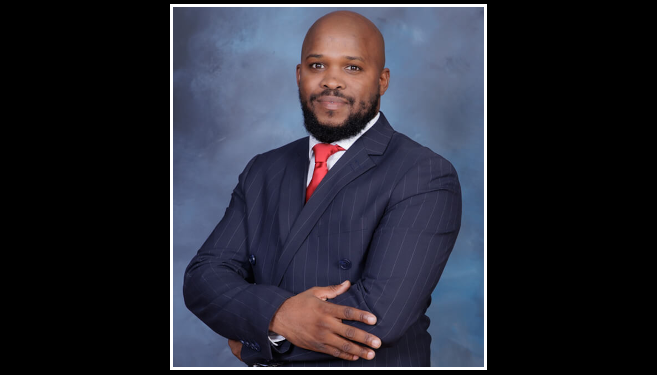
Dr Masibulele Phesa CA (SA), RA
Senior Lecturer and Thuthuka Programme Manager
School of Commerce, UKZN
*The views and opinions expressed in this article are those of the author and do not necessarily reflect the official policy or position of the University of KwaZulu-Natal.


