
Pioneering Public Health: Tracking Antibiotic Resistance in Wastewater
- Posted by ukzn-admin
- Categories News
- Date August 27, 2026
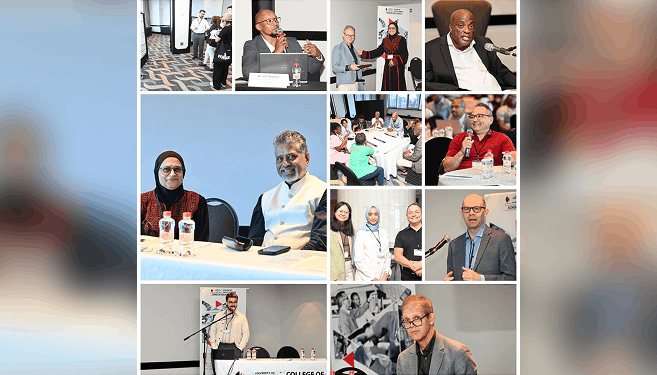
The University of KwaZulu-Natal (UKZN), successfully co-hosted the International Conference on Sewage Surveillance of Antibiotic Resistance in Sub-Saharan Africa with the University of Gothenburg and the Centre for Antibiotic Resistance Research (CARe) in Sweden, the Technical University of Kenya, and the Manhiça Health Research Centre in Mozambique.
Convened in Durban against the backdrop of the growing global threat of antimicrobial resistance (AMR), the three-day conference brought together policymakers, researchers, public health practitioners, national AMR focal points and One Health stakeholders from across Africa and beyond to explore how sewage-based surveillance can strengthen antibiotic resistance monitoring and inform evidence-based public health policy.
The conference showcased the findings of the four-year Sewage Surveillance of Antibiotic Resistance (SeMAR) project, funded by the Wellcome Trust, demonstrating how wastewater surveillance offers a practical, cost-effective and scalable approach to tracking antibiotic resistance at population level. Discussions focused on translating scientific evidence into national surveillance strategies capable of strengthening health systems across sub-Saharan Africa.
Conference host, South African Research Chairs Initiative (SARChI) Chair in Antibiotic Resistance and One Health, Professor Sabiha Essack of UKZN’s Discipline of Pharmaceutical Sciences, said: “As antibiotic resistance rises worldwide, sewage monitoring provides a cost-effective way to track it.”
UKZN’s Acting Deputy Vice-Chancellor for Research and Innovation, Professor Anil Chuturgoon, said: “As we stand on the cusp of a new era in public health innovation, today marks a pivotal moment. We converge not just as experts, but as stewards of a shared vision: to confront one of the greatest threats in global health – antimicrobial resistance or AMR – through the ingenious lens of sewage surveillance.”
“Why now? Why here?” Chuturgoon begged the questions. He said sub-Saharan Africa bears a disproportionate AMR burden. “The WHO estimated that by 2050, AMR could claim 10 million lives annually worldwide, with Africa facing the deepest rise due to limited diagnoses, overuse of drugs in agriculture, and fragile healthcare system strained by climate change in urbanisation. Yet this continent is no victim – it’s a vanguard. From Kenya’s pioneering wastewater monitoring to South Africa’s genomics surveillance hubs, we’re pioneering situations that the world watches.”
Essack, who welcomed the delegates, also presented the challenges and solutions of AMR Surveillance in Africa. She said the highest mortality burden occurred in low- and middle-income countries, “particularly in sub-Saharan Africa (81.5 deaths per 100 000 population) and South Asia (68.5 deaths per 100 000 population).”
Essack facilitated an interactive session examining the challenges and opportunities surrounding AMR, encouraging delegates to collaboratively develop problem and solution pathways that can be translated into policy and practice.
Opening the scientific programme, delegates heard a keynote address by Dr Evelyn Wesangula, Senior AMR Control Specialist of the East, Central and Southern Africa Health Community, who reflected on the current state of antibiotic resistance across the continent and the urgent need for co-ordinated responses. This was followed by Professor Joakim Larsson of the University of Gothenburg, who highlighted the environmental dimensions of antibiotic resistance and the growing importance of wastewater surveillance in understanding the spread of resistant organisms.
A major highlight of the conference was the presentation of findings from the SeMAR project by researchers from South Africa, Mozambique and Kenya. The collaborative studies demonstrated how sewage monitoring can complement traditional clinical surveillance by providing valuable insights into antibiotic resistance circulating within communities.
Also representing UKZN, Mr Siyabonga Gumede presented South Africa’s case study on surveillance of urinary tract infections and sewage monitoring before sharing findings on whole genome sequencing of extended-spectrum beta-lactamase (ESBL) isolates recovered from urine and wastewater. Researchers from the Manhiça Health Research Centre and the Technical University of Kenya presented complementary findings from Mozambique and Kenya, illustrating the feasibility of implementing sewage surveillance across diverse African settings.
The programme also featured presentations on wastewater surveillance methodologies, phenotypic monitoring of antibiotic resistance, antimicrobial consumption estimates derived from wastewater analysis, and innovations in genomic surveillance from the University of Gothenburg who are the principal investigators on the SeMAR project.
Selected oral presentations and poster sessions further showcased emerging research from scientists working across the antimicrobial resistance landscape.
Recognising that scientific evidence must translate into public health action, the conference dedicated significant attention to policy engagement. Representatives from government departments and ministries in South Africa, Kenya and Mozambique participated in an interactive policy dialogue examining how sewage surveillance can be incorporated into national antimicrobial resistance surveillance systems. Discussions highlighted the importance of cross-sector collaboration between environmental, veterinary and human health disciplines within a One Health framework.
Throughout the conference, delegates emphasised the importance of regional partnerships, capacity development and knowledge exchange in addressing one of the world’s most pressing public health challenges. By bringing together internationally recognised experts with policymakers and early-career researchers, the conference created a platform for strengthening surveillance systems while fostering collaborative networks that extend beyond national borders.
The conference concluded with an interactive session focused on the future of AMR surveillance in Africa and the expanding role of wastewater monitoring in informing public health interventions. Delegates reaffirmed the need for sustained investment in surveillance infrastructure, scientific collaboration and evidence-informed policymaking to combat the growing threat of antimicrobial resistance across the continent.
As co-host of this landmark gathering, UKZN reinforced its position as a leading institution in AMR research and demonstrated its commitment to advancing innovative, interdisciplinary solutions that contribute to healthier communities in South Africa, across Africa and globally.
Words: Lunga Memela
Photographs: Albert Hirasen


